Movie Reviews: Wonderful World and The Lost City

, | 1 comments


Yesterday the Shashati Show at Cinemagic transpired. To give merit and lauds to the adaptability and endurance of the human condition, I managed to brave +40 Celsius heat for almost three hours, without breaking into a sweat. Among other noteworthy great feats and accomplishments of man, four different films from the region were presented. Although, I was deeply disappointed that the original host of the event, Showtime's upcoming standup comedian and the most famous Korean-Arab Wonho Chung was not in attendance, I was still pleasantly surprised by the experience. I will write about the two Kuwaiti films that were aired, one of which was my favorite of the night and the other, the least.

1. Wonderful World

Surely the most dazzling gem and well-marketed film of the set, "Wonderful World" by Tamir Naber brings to Kuwait a genre that I had thought previously unknown to these shores: The Musical. The invitation description of the movie is as follows:

This is the musical journey of star-crossed lovers Zaid (Nima Algooneh) & Zaina (Sama Falah) in their quest for marital bliss. Lost in a world where men and women speak different languages, they pay a visit to marriage counselor extraordinaire Dr. Brendt (Tamer Gargour), but little do they know, he has problems of his own!

Although I do not boast to know that much about the select amount of bonafied Kuwaiti films, Wonderful World surely adds a fresh, new element to this set. From the moment the ensemble of singer/actors/dancers breeze through their introductory musical item number in crayola, the audience knows its in for a sweet nectar of an experience. Even though the movie's main subject deals with marital conflict and personal crisis, the movie never forsakes allowing these actors to exhume their upmost cuteness throughout the entire duration.

Art does not incubate in a void, rather it is the product of the elements surrounding those who create it. Thus, many films in the region might be prone to reacting against a society that too often inhibits freedom of expression. In countries that aim to suppress, movie makers might aim to shock. In a political climate of segregation, religious extremism, and in some cases, conflict, directors and writers might focus on exploring these topics that shape their daily lives.

However, in this pure action-reaction paradigm, art often too easily becomes the mere foil of the oppressor, without its own backbone and often as buffoonish and as caricatured as the forces against which it fights. Therein lies my disappointment with the Kuwaiti movie, Banana, which I felt held little value other than to perforate norms of premarital sex and sexual frustration in Muslim societies with precisely this: shock, nonsensical-ness and interspliced images under the escape-chute of "surrealism".

And this is where Wonderful World steps, better said, pirouettes in. In its examination of a newlywed couple's first marital crisis, the movie does not attempt to tackle difficult subject matters of topics often deliberately ignored in the greater public eye, such as women's rights, domestic abuse, or empty marriages. Rather, it tells a universal, carefree bubblegum tale of two lovers (who also seem to be each other's best friend as well) too in love with their own love story to not make things work out. In this way, the movie is infused with its own youthful soul, as it has been created with its own image in mind, not a reactionary counterpoint to society.

The soundtrack is varied, has applicable lyrics and is executed well by the actors, who each deliver a their lines with an inviting singing tone. The two main actors are so down to earth and natural in both their character portrayal and delivery that you feel as if you already know the characters in your own life.

One of the greatest factors working in the movies favor is the wonderful love-hate chemistry between the two main actors. Zaid, a lovable Gen-Y husbum is played by linen-sporting, suspender strapping, fedora tilting eye-candy Nima Algooneh, while his outspoken, girl-in-charge wife, Zaina, is played by the honeydew Sama Falah. Their zingy one-line cut-downs and playful critisms of each other perfectly encapsulate the travails of newlyweds. They fight all the time over every new obstacle presented in their adjustment to married life, but at the same time, their fresh love makes it so that they almost seem to enjoy the banter of argument itself. The quick ignition disagreements lead to quick and tango-passion making up sessions, that if anything, seem to keep the couple entertained with each other-and the audience as well in the process. The role of the therapist was hilariously executed by Tamer Gargour with perfect Dr. Freud comical diction. However, what was missing was a greater interaction between the three of them. Dialogues were reserved for Zaina and Zaid, and monologues relegated to the therapist. Can there not be a three-way conversation?

In sum, I think its pretty obvious that this was my favorite movie of the evening. The character development was excellent, the wardrobe and set fresh, chic and contemporary, the actors executed their lines wonderfully, and the greatest credit can be given to the writer for the witty, tongue-in-cheek dialogue that had me laughing the whole time.

I would love to find a copy of this movie to post online.

2. The Lost City

Given my obsession with Kuwait's urbanization without a trace of history, the title "Lost City" mislead me into thinking the movie's focus would be as such. The film begins with the main character, a spiky-haired, mallrat suspect man in his twenties on his way to what seems to be a lazy-Friday middafternoon cheeto and redbull Baqala run. In front of the shop, he slips on some discarded batteries and knocks himself unconscious, only to find himself....low and behold!....in the middle of a souk in an pre-modern medina.

Although he like totally is so sure he randomly landed on some wack movie set, the picture does not seem to cut like it should after a take, and he soon realizes he seems to have transported back in time, or at least a long time ago, in a city far, far away. After being mistakingly thrown into the local jail, where he befriends a strangely cloaked man with a strangely worded mission, our digital-age protagonist seems to bypass the "oh shit, where am I?" factor to quickly take up his new friend's noble cause. And what might this cause be? Why restitution of the dethroned royal family over rule of the kingdom after having been maneuvored out of power by an evil, macchiavellian minister. In short, the movie seemed to me to have several different robbed elements: the set design and soundtrack of a sappy Lebanese historical telenovela, the entire plot, bit by bit of the Lion King, and the two-dimensional honor code of some of the later Lord of the Rings installments.

Most of all, the main actor's physical comedy wore my patience thin. A himbo through and through. his brain-dead theatrics pervaded through the entire film, which-while funny at first-only ridiculed and belittled the already pretentious moral airs of the royal family when the two parties were juxtaposed later in the film. For example, at the end of the movie, in a great WTF? moment, the newly instated King's first action is to appoint the main character to be one of his new ministers. The whole idea is implausible, and perhaps I am missing the point, as the entire world after all is a fabricated dream of the main character's concussion-induced delusion, but at the same time, it frustrated me that the main character did not seem to mature or learn from the experience in any way.

Rather than the story of a young man who develops an understanding of "doing whats right" for the good of a nation, a tale of the unyielding perseverance and sacrifice of good leaders over the morally corrupt and self-interested, or a message of "it takes a village", the movie plot comes off more as a Bill and Ted's Excellent Adventure. Upon awakening from knocking himself out in his slip-up, he wakes up and realizes everything was a dream. Probably lacking the sufficient brain cells for adequate long-term memory, he walks off to the cue of the credits, leaving us unsure if the main character's dream lessons will be carried over in his daily behavior and actions. To me, it did not seem like our protagonist "got the memo", and even if he did, the whole plot of the gallant prince regaining grassroots following in his kidnapped kingdom to retake the land seemed extremely preachy to me. In fact, it seemed like a public service mouthpiece for the royal families in any of these Gulf monarchies.

In sum, The Lost City seems to me to be a lost opportunity to discuss a lot of other, more pertinent things: the lack of civic duty among youth today, the loss of traditional culture in the contemporary cityscape, even the Parliament-Royal family political divide. Instead we are given a loopy, ridiculous main anti-hero-whose goofy theatrics only make you more annoyed with him, and even with his entire generation of gel-haired, acid-washed jeans sporting, irredeemably dumb boys, by the end of the film.


News of the Weird: "Gaddafi Welcomed in Italy", Reuters

| 0 comments

24 June 2009: Second Pecha Kucha Night in Kuwait

| 0 comments

Host:
Type:
Network:
Global
Date:
Wednesday, June 24, 2009
Time:
7:30pm - 9:30pm
Location:
Al-Qabliya School
Street:
Ali AlSalem Street
Phone:
99480664
Email:

PechaKucha: Kuwait
Cordially invites you to a performance
PechaKucha Night #2
20 images x 20 seconds
to be given by:

Shurooq Amin
Nada Al Shammeri
Ahmed Al Rifae
Raffi Armoudjian
Danah Al Rababa
Samer Mohammed
Bassem Mansour
Nofal Abdelali

Date: Wednesday June 24 2009
Time: 7:30 pm
Place: Al-Qabliya School - Kuwait City
Email: pechakuchakuwait@gmail.com
http://www.pecha-kucha.org/cities/kuwait-city
Contact number: +965 99480664

Hosted by: PECHA-KUCHA NIGHT ORGANIZERS
Dr.Asseel Al Ragam
KASA (Kuwait Architectural Student Association)
Kynn (from Design Squared)

Moderated by: Haya Al-Munaifi

Sponsored by:
NCCAL (National Council of Cultural Arts and Literature)
Arnest Group

To see last event's videos, see:

Shashati Show

, | 0 comments

Movie reviews coming very soon...

Wall Streeet Journal: "Upon Sober Reflection, Bahrain Reconsiders the Wages of Sin Island Reliant Upon Debauched Visits From Thirsty Saudis..."

| 0 comments

After having been to Bahrain two times, I completely empathize with the dilemma Bahrainis feel about the problems of alcohol and sex commerce caused by Saudi's tourism refugees. Why must Saudi Arabia's prohibitive domestic policy have so many negative externalities for the rest of us who would like to simply have a glass of wine in a non-sleazy bar?


MANAMA, Bahrain -- Every weekend, bumper-to-bumper traffic blocks the causeway into this small island nation as visitors from nearby Saudi Arabia flock to delights unavailable at home: movie theaters, bars and, for some, commercial sex.

With few other attractions, Bahrain's booming tourism industry thrives on the island's reputation as a freewheeling oasis just a short drive from major Saudi cities. Bahrain has little oil of its own; tourism, mostly by the four million Saudis who cross the causeway each year, accounts for a tenth of its economy.

All of this is endangered, as Bahraini legislators press to scrap the country's drinking laws -- currently the most liberal in the Persian Gulf -- and to impose near-total prohibition.

"I'm sorry to say, but Bahrain has become the brothel of the Gulf, and our people are very upset about it," says parliamentarian Adel Maawdah, one of the promoters of the new legislation. "It's not only the drinking that we oppose, but also what it drags with it: prostitution, corruption, drugs and people-trafficking...." (for full article, click here)

AL-Jazeera English: "Chiquita: Between life and law; People & Power"

, , | 0 comments

I have been anti-Chiquita for a long time, especially after having lived in Central America.  Chiquita has a long, sordid history of short-changing small banana republics and is currently a major player in the displacement of small farmers in many banana-exporting countries, which has led to banana trade wars between the United States and the European Union in ongoing WTO disputes.  I'll be happy to share a paper I wrote in graduate school on the topic for a class I took on game theory upon request.  Al-Jazeera's in-depth reports continue to surprise me in their scope.  


Al-Watan Daily: "Despite new regulations, laborers still working in high heat"

| 0 comments

Dear Nancy, 


Please continue to work on investigative journalism on worker rights.  Too often, the most critical articles are allotted for the opinion section of the newspaper.  Investigative journalism is crucial for change, similiar to the muckrakers movement at the turn of the 19th-20th centuries.  The companies who violate regulations need to be MADE PUBLIC.

"Kuwait has recently issued a number of regulations that would partially protect the rights of almost two million expats workers in the country, especially workers who engage in jobs situated in the harsh atmosphere of Kuwait''s desert climate.

However, a number of workers have expressed their dismay to Al Watan Daily, saying that the State regulations do not deter their employers from incurring violations.

Lokman, a Bangladeshi laborer, told Al Watan Daily, "We work in the heat for long hours and we don''t even take a break. We work from seven a.m. to four p.m. in the heat, and when we complain they deduct from our salaries. Some of my friends have received sun burns from the heat and were taken to the hospital, and still nothing changes. The situation has not changed."
Ashraf, an engineer, told Al Watan Daily, "According to the laws in Kuwait, if the temperature reaches above 45 degrees Celsius workers have the right to not work outdoors, but in reality, if the temperature reaches more than 50 degrees Celsius, workers are still forced to work and many of them receive sun burns from the heat. The law also says that working hours should be from four a.m. until noon., but what actually happens is that the workers work for more than 10 hours a day, from six a.m. until four p.m., and sometimes they don''t even have a break in the middle to rest."

He added, "There are unfair people in Kuwait who are not sticking to the rules and regulations for labor, and they treat them (the workers) like animals."

Abdel Moheen, an Egyptian laborer, echoed the voices heard from a number of laborers facing these hardships.
"I work from early morning until late afternoon, and I am only paid 70 (Kuwaiti) dinars. This is not enough ـ I have to pay rent and pay for my food. They make us work for long hours in the heat and they don''t give us a break; we are suffering a lot and they are not providing us with helmets or anything that protects us from the heat. We need to get our rights and be treated like human beings. We have to work in the shade, or if this continues, we will surely die."

A South Asian worker recounted an incident involving a former coـworker who was working in construction for a new building and, due to the immense heat, fainted and fell to his death.

"I was working with my friend when the temperature was almost 55 degrees Celsius, and I could see that he was dizzy from the heat. I called our supervisor and told him, but he didn''t care, and made my friend continue his work. After half an hour my friend fainted and fell from the fifth floor of the building we were working on and died. This was a big problem and we all stopped working in protest, but nothing was done to solve this and we were forced back to work."

"Labor companies in Kuwait must stick to the rules of the country and give the workers their rights, because the laborers are human beings and shouldn''t be treated like slaves. These companies must work within the allocated legal hours. The workers must be properly paid and they must be saved from the heat and given protection by wearing helmets and talking their breaks on time," said an unnamed worker employed by a prestigious construction company." (for link, click here)

Kuwait Times: "ILO renews criticism of Kuwait"

| 0 comments

"The International Labor Organization (ILO) has renewed its criticism of Kuwait, especially with regard to its reluctance to resolve cases of human rights infringement. It has raised several questions that concern with alleged cases of abuse suffered by expatriate workers and housemaids. The organization also questioned the Cabinet's decision to pass a law that bans public gatherings, stating that such actions violate international treaties and interrupt the democratic process. The ILO also highlighted Kuwait's lackadaisical attitude with regard resolving the bedoon issue.

In response to the ILO's queries, the Ministries of Labor and Interior will compile a report that addresses each issue and the corrective measures taken, reported Al-Qabas. The Labor Ministry has also compiled a report that will be delivered at an international convention that will be held in Geneva next week. The Ministry of Interior has already addressed issues pertaining to expat laborers by listing out the procedures taken to secure their rights according to international treaties. The Ministry of Interior (MoI) has promised to submit its findings to the Labor Ministry shortly." (for direct link, click
here)

Reuters: "Gulf states still wedded to kafil system"

| 0 comments

Pessimistic outlook on the idea of norm-spread resulting from Bahrain's big move.  In sum, the article seems to put out a trade-off between reform for a more humane labor rights law towards foreigners and job security for nationals.  However, like any bandage that must be removed, it is better to rip it off quickly than to hold it off.  Everyone knows the national work ethic is completely unsustainable.  One day, the current benefit system for nationals, if still dependent on oil revenues, will no longer insist.  This will eventually lead oil-rich societies in the Gulf to adapt their societies accordingly.  This is going to most likely have to happen sooner than later, and I really feel the end of an era will be approached quite soon.  


If legal reform for workers was framed around ideas of bringing a country into an era of greater progress, modernity, development, and yes, maybe even greater Muslim morals incorporated in practice, then maybe you could incentivize citizens.  However, the idea of giving foreign workers even MINIMUM human rights in the work sphere as stipulated by the United Nations and the International Labour Organisation agreements is built up as releasing a floodgate of foreigner demands that could lead to political rights.  This protectionist fear tactic, concern for nationalisation and growing mistrust of the foreign-to-citizen population ratio is only building up as a reaction to the economic crisis.  The regional office for the ILO should really move out of Kuwait and into Bahrain in my view.

Below is the opening text and link to an article that gives a succinct survey of the state of the kafila sponsorship system in the different GCC countries following Bahrain's reforms.

MANAMA/DUBAI: Gulf Arab states are unlikely to follow Bahrain in dumping the controversial kafil system used to import millions of foreigners as demand for cheap labor outweighs worries about job prospects for local people.

According to the CIA World Factbook''s July 2009 estimation figures, Kuwait currently holds 2,691,158 residents, 1,291,354 of which are nonـnationals.

Kuwait has introduced a minimum wage for some lowـwage jobs such as cleaners after violent protests by Bangladeshi workers but analysts say the rules are not always implemented.

The government has submitted a bill to give workers more rights but critics say it will not help much as it keeps the sponsorship system intact. (for link click here)

The Video Seizing the Net: Max Blumenthal's "Feeling the Hate In Jerusalem on Eve of Obama's Cairo Address"

, , | 1 comments

Before any conclusions are drawn from watching the shocking video, I encourage everyone to read the poignant justification blog, written by Mr. Blumenthal, arguing why he made the video and discussing the reaction he has received in its wake, found by clicking here.


News of the Weird from Al-Watan Times: Devil-Worshipers Threat to Ideal Family, and Homosexuals Too

| 1 comments

How devil-worshippers, homosexuals, and by the looks of the picture, the pope are lumped together is quite peculiar.  How an article of this caliber gets chosen over more pressing topics about "protecting future generations" is depressing.


"Ideal Mother head asks for unity in combating Satanists"
KUWAIT: Chairperson of the Ideal Mother Committee Sheikha Fareeha AlـSabah has asked Kuwaiti society to work together in combating "devil worshippers," since this phenomenon "affects the whole family."

In a press release made available to Al Watan Daily, she went on to say that this phenomenon "is expanding discretely by receiving foreign instructions to destroy local virtues and values."

Moreover, Sheikha Fareeha expressed bewilderment that "some authorities support such a phenomenon under the name of freedom, especially when devil worshippers behead cats and dogs, in addition to worshipping the devil."

She explained that these authorities "do not protect the future generations by indirectly supporting devil worshippers."

Furthermore, Sheikha Fareeha announced that she possesses information about local devil worshippers and homosexuals, and that she presented this information to the former Parliament.

She went on to say that she will combat this phenomenon "by revealing facts about these groups, in addition to holding extensive awareness forums and meetings to alarm families so that they can protect their children."

It is worth noting that Sheikha Fareeha is considered to be the first woman in the Middle East to combat such practices by steering misled groups away from the devastating practices that they follow (for link, click
here)

Event: The Shashati Show by Cinemagic

| 0 comments


Attention all film lovers!

Shashati.TV, in association with Cinemagic Kuwait, are proud to present "The Shashati Show" - Kuwait's biggest Audio-Visual variety performance!

Hosted by ShowTime's very own comedy superstar, Wonho Chung, the evening will include the Kuwait premier of the highly anticipated, all-singing, all-dancing musical short film "Wonderful World".

The show will also include a selection of the latest and greatest shorts from across the region, including Emirates Film Competition Winner “The Beggar and Moustafa’s Brain”, as well as Jordanian Filmmaker Fadi Haddad’s critically acclaimed film “Once upon a Piano”. The show will also feature a selection of the most recent prize-winning Kuwaiti short films presented by the filmmakers themselves.

But that’s not all! Screening for the very first time to a public audience in Kuwait will be 
ikbis.com’s hilarious “Doublage” comedy skits, as well as some innovative Kuwaiti audio-visual comedy clips & sketches!

Join us for a fun-filled evening full of laughs, tears, and above all films!

The event will take place at 7:30 p.m., on Thursday, June 11th at Cinemagic’s Rooftop Venue in Old Salmiya. Tickets will be available at the location for the price of 2 K.D – but advance booking is advised, as seating is limited. Send an e-mail to 
filmkuwait@gmail.com, or call 97996100 to reserve your ticket today!

------------------------------
------------

Here is a sneak peek at the show's line-up:

“Wonderful World” (23' - Kuwait/Jordan)
This is the musical journey of star-crossed lovers Zaid (Nima Algooneh) & Zaina (Sama Falah) in their quest for marital bliss. Lost in a world where men and women speak different languages, they pay a visit to marriage counselor extraordinaire Dr. Brendt (Tamer Gargour), but little do they know, he has problems of his own! 

The Beggar & Moustafa's Brain (8' - Dubai)
Moustafa must make a choice. Its not a difficult one, but beauracracy, agendas and miscommunication are all conflicting inside Moustafa’s brain. And this conflict will take you on a journey on Moustafa's train of thought.

Obama Rumbles in Cairo, Murmurs in Riyadh

, | 1 comments

President Obama's speech in Cairo (despite some minor pronunciation slip-ups) no doubt re-affirms his oratorical skills and time-tested ability to deliver powerful speeches, dense with ethical messages, a sage understanding of issues and, more than anything, moderation and pace.


However, while Obama was up to to the challenging task proving that classic liberal American pillars of freedom of religion, democracy, tolerance and progress can also be sensitive to Muslim values and identity, this is a necessary but insufficient condition to further convincing the Arab world that America's interests have them at heart.

After all, talk is cheap.  The incredible amount of hype that had amounted in the build-up to Obama's expected speech in Cairo stemmed from his pre-election promise to reach out to the Middle East in way that would be a stark departure from his predecessors.  In many ways, his speech truly was bolder than many former US presidents' public statements on the region.

However, part of many moderate Muslims' disenchantment with U.S. foreign policy stems from America's actions--not her words.  The peppering of his speech with "shukran" and "asalam alaikum", the encyclopedic, laudatory run-down of all the major contributions of Islamic civilization to culture and science in modern history, the poignant quotations of the Holy Quran to add breadth to a talking point and the many, many analogies of the plight of Muslims to different time periods of turmoil in the United States all demonstrate a deliberate verbal campaign to foster a new acceptance and trust of America.

But none of these beautiful verbal arrangements will be credible without corresponding policy action.    While all eyes seemed glued to the tv sets in the direction of Cairo for the megalithic, one hour ceremonial "dawn of a new era" of diplomacy in the region, I find myself having been more intrigued by learning more about his brief stopover in Saudi Arabia prior to landing in Egypt.  

Saudi Arabia, one of the most oil-rich countries in the world and a key US economic ally is also the homeland to some of the most famous terrorists in the world (many with high-class or royal family connections), boasts an abysmal human rights and freedom of speech record and also happens to be home to the most religious Muslim site on earth, Mecca.  A difficult game of Chess.

And this is perhaps the very fault in America's foreign policy attitude of lumping together a "MENA" region (for whatever that means) for the sake of categorization.  The simplification of this region as a single unit (in the case of the speech, "Muslim countries", whatever that means, and as absurd as "Christian countries") in rhetoric is incoherent with US ground-level policy, which has always had quite different and multi-pronged strategies according to each country and/or subregion.  This is where the discrepancy lies, which is causing an increasingly bitter aftertaste after so many saccharine speeches on behalf of US presidents.  US foreign policy in Saudi Arabia or Kuwait has nothing to do with US foreign policy in Palestine or Lebanon, for example.  

So what signs of change can be made from Obama's visit to Saudi Arabia?  Prior to this visit, the only real coverage of the President's interaction with KSA had emanated from his faux-pas ceremonial bow to the Saudi King Abdullah at the G20 summit in London.  While most recent coverage of his quick stop in Saudi Arabia has been eclipsed by anticipation to the Cairo leg of the journey, some noteworthy things resulted.

Rather than the fanfare that greeted him at Cairo University, it seems the KSA visit was quite a private affair.  In the same style as last year with then-president Bush, Obama was escorted to King Adbullah's Arabian horse-filled ranch at Jenadriyah.  Members of the press accompanying the President were under strict orders given to the State Department by the Saudi Government, which included the following (courtesy of the Friday Lunch Club blog):

—11:29 a.m. ET yesterday, State Department e-mail to White House reporters leaving today for Riyadh: “U.S. Embassy Guidance for Journalists — Dear Members of the White House Press Corps, The Saudi government is permitting journalists accompanying President Obama entry into the country without a visa or the usual customs procedures. While in Saudi Arabia, therefore, journalists are expressly prohibited from leaving the hotel or engaging in any journalistic activities outside of coverage of the POTUS visit. Those who do so risk arrest and detention by Saudi authorities.” 

— 3:50 a.m. ET today, State Department e-mail to White House reporters leaving today for Riyadh: “Correction: U.S. Embassy Guidance for Journalists — The U.S. Embassy in Riyadh Saudi Arabia would like to recall the inaccurate guidance issued to the White House press corps on June 1.”

According to The Kuwait Times, the US President was quoted as saying "I am confident that working together that the United States and Saudi Arabia can progress on a whole host of issues of mutual interest."  Then the King presented Obama with a the kingdom's highest honor, entitled the King Abdul Aziz Collar (ironic wording), which he awarded to the president.  They "sat together in gilded chairs, sipped cardamom-flavored Arabic coffee from small cups and chatted briefly in public before retreating to hold private talks on a range of issues."

Retreating to hold private talks really stuck in my mind after reading the little coverage of the Saudi Arabia stop.  If we wish to see a dramatic departure from earlier Bush policies in the Middle East, then Saudi Arabia, the major player GCC country, does not seem to fit the emblem of this new page turned, and Obama's trip (from what was seen on the other side of the closed doors) did not step in great deviation from his predecessor.  But the truth is, the United States has always played a double-game in the Middle East between the resource-rich and the conflict-prone, the disjointedness of which only surfaces when terrorism plots get connected to the Kingdom of Saudi Arabia.

So what are my hopes for Obama?  I hope that he will put positive pressure for freedom of press, human rights and transparency not only on conflict-prone countries that the United States sees as a security threat in the region, but also on the resource-rich Gulf states with whom the US currently engages in a mutually beneficial economic situation.  This would truly demonstrate his commitment to these values.  If he indeed hopes to wean the United States off foreign oil dependency into more innovative energy technologies, perhaps he will be in a more advantageous position to do so.  As the United States plans to diversify its economy off oil, bilateral relations with Saudi Arabia will change as well, and most likely, demands from the United States will diversify beyond petroleum barrel pricing negotiations and Israel.

Watch The Cairo Obama Speech Here

, | 0 comments

I myself am just starting to watch it now.  I will be writing another post on Obama's visit shortly.

This Is What Censorship in Childrens' Schoolbooks Looks Like

| 0 comments

Here are some before and after pictures from the good ole' black felt-tip jumbo pen from school books here in an elementary school in Kuwait.  

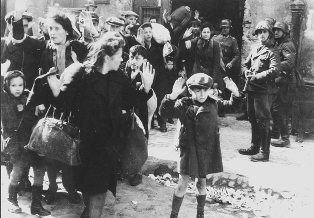
In a high school textbook on world history, I also once saw a half page photo blocked out by a piece of green construction paper that had been glued onto the sheet.  When I squinted my eyes and held it up to sunlight it was the following iconic image of the Holocaust.  Also, all mention of Israel is blotted out.  

Regardless of where you stand on the Palestine/Israel issue, you really cannot teach World War II accurately without mentioning the Holocaust.  Secondly, why keep people so ignorant on the very issues they themselves consider so important?  This is a rhetorical question.    


Hot Off the Press

| 0 comments

The magazine en.v (www.envearth.com, which will shortly be unveiling an interactive website) has now stocked shelves with its fourth issue, focusing on governance.  I got my copy at the Sultan Center in Salmiya.

Ban on Outdoor Work from 12pm-4pm

| 0 comments

According to the Al-Watan Daily: "The Ministry of Social Affairs and Labor has issued a decree banning workers from working outdoors from noon to 4pm. The decision will be in effect from June 1 to 31 August. International organizations had previously criticized Kuwait on allowing laborers to toil in the hot summer sun, prompting the ministry to pass a decree to this effect. Fahad Al-Nowaiem, the Work Administration Director said that this ministerial decree is compatible with the labor law which allows the Minister of Social Affairs and Labor to issue a decision to reduce the number of working hours considering the nature of the work undertaken. Working hours will be rescheduled in such a way that projects under construction are delayed."


I am going to be keen on keeping an eye out for violations (I am speaking to you OTIS Construction)

Spotted in Cairo Souvenir Shop

| 0 comments

From the Foreign Policy blog (check here. to see full blog post) 


"When I asked 25-year-old shopkeeper Hamada Hagar, proprietor of the Welcome souvenir shop, about the meaning of the T-shirt, he merely shrugged. 

'NBC ordered it, he said, referring to the American television network. "My sister works for them. CNN ordered ceramic plates with Obama's picture on it and 30 cartouches with 'Obama' written in hieroglyphics."

Gulf Kids, Gap Year?

| 0 comments

Many countries have it: programs that allow young people (both experienced and fresh out of school) to volunteer either domestically or abroad.  While I am not going to discuss the merits or criticisms of volunteering and charity, I will acknowledge that foundational to these experiences is the spirit of civic duty.  


Different variations of these types of experiences include Volunteer Service Overseas in the UK, the domestic Indicorps in India, Peace Corps and Teach for America in the United States, Jovenes Cooperantes in Spain, and UN Volunteers by the United Nations.

This is the next step for Gulf countries-to share not only their wealth, but their time, giving young people a chance to learn and give in the process.  I was wondering what current opportunities there are for such programs in the Gulf.  I know the Kuwait Government is willing to fund students' university expenses overseas...so why not volunteering overseas?  The Arab Fund for Economic and Social Development could also offer such a program.  Of course, the first step to promoting volunteering is to better promote charitable organizations domestically.  

Thoughts?

Kuwait's Elusive Hip Hop Scene: Evidence Found

| 0 comments


Just when I thought homegrown hip hop in Kuwait was a more difficult sighting than a Sasquatch, Bazaar Magazine, in their June issue, interviewed a local band.  Below is the interview and the link can be found here.  I feel the interview could have been conducted a lot better.  The questions consisted of a generic stockpile and did seem to be the kind that someone who had listened to the group's music beforehand would have posited forth.  All that was missing was for the reporter to also ask the rappers what their favorite color was or their favorite ninja turtle, for that matter. 


 Its really a missed opportunity as I gathered no understanding of the most crucial element of any hip hop artist's work: their lyrics and the causes they rap about.  Also, how could the reporter not follow up a question, after one of the members mentioned how their album had been censored in Kuwait, about the challenges of being a q8i hop hop artist in terms of censorship, limited outlets for live performances and the type of local following they have.  There is not even a song sample, video or link to a myspace page or website.  On the other hand, the band's self-promotion drive could use a pair of new lungs.  While it seems "all eyes are on Army of One", both the interviewer and q8i restrictions ensure that they fall on deaf ears.  Does anyone know about this band and what they actually rap about? 

"ALL EYES ON THE ARMY OF ONE"

The Army of One is Kuwait’s very own grassroots rap and hip hop group, homegrown to bring us fresh rhymes and soulful beats that carry a message of strength and endurance. It’s not easy breaking boundaries, and that is exactly what the Army of One did with their debut underground album Alienation back in 2002-03, when the band first started working with Alien Records. No strangers to adversity, Army of One has swum against the current to offer listeners an authentic rap and hip hop sound which is going strong until today, making no excuses for breaking molds wherever it can.

Although four young men comprise the group, the band derived its name from the symbolism behind the importance of being one; sticking together to effect change in a regional music industry which all too often seems strewn with identical faces. It’s also not easy bringing a musical identity which originated from a specific community within the United States to the Arab mainstream, remolding and re-adapting it to another culture which all four men in the band hold close to their hearts. Yet they all feel the music within them, having had grown up listening to it, and testifying to many personal experiences which they went through in their lives that are similar to the plight endured by the pioneers of soul, rap and hip hop.

DUB G, Daffy, Arab Face and QB are the Army of One. Together, they bring Sudanese, Palestinian and Kuwaiti heritage to the mic, making no false pretenses about their staunch loyalty to the countries to which they belong. It is the struggle of being Arab in the world, and the fight to create controversial music in a largely conservative society, which motivates them to keep on moving. They know who they are and what they love, and they have a passion to sing it loud and proud. They had to face critics who accused them of importing a foreign musical style, authorities red-taping their creativity, and record labels imposing commercial sounds on their musical preference, and yet they came out on top and are here to today to speak with bazaar about it. Dub G writes and delivers the rap, and produces the music along with Daffy. Daffy, Arab Face and QB sing, and their diverse and strong vocal styles have received praises from many who appreciate what it means to live out your dream. Army of One will be coming out with a new album soon, so stay tuned. Below, bazaar’s Q&A with the band sheds more light on the men behind the voices.

bazaar questionnaire :

bazaar: Do you hope that the Army of One can become the most famous regional hip hop/rap group?

Dub G: Let’s just get one thing straight: The Army of One is the most famous regional rap and hip hop group. In the 6 years we’ve been out here, we’re still the only group to have dropped 2 official albums in the market across the Middle East. We’re still the only the group that has had 6 major video clips playing on TV, and we achieved all of this before MTV Arabia and other major satellites were launched. We went from nothing to the top, and we started the official movement of rap and hip hop in the music industry in the Middle East.

QB: What I want to hear is, “If it wasn’t for the Army of One, we wouldn’t be here”.

b: Why did you choose this type of music, and why is rap and hip hop important to you?

Arab Face: We grew up listening to this music, and we loved the beats, lyrics, and realism that comes with it. The whole culture behind it suits us perfectly. We always put Arabic in there somehow in someway to mix both cultures and creation fusion. It makes us unique.

DUB G: I chose rap because it defines a person within; it’s a way of life, a culture and a mentality that hardly anyone dares to bring out to the light. At least that’s how it was when I first started back in the 80s and 90s, and now it may be more in the mainstream, but rappers who keep it real don’t usually have the chance to get the exposure they need due to political reasons. That’s just a shame.

Daffy: It is the essential type of music. It’s one of the biggest sounds, and everyone can listen to it. It allows you to easily get your message through to people’s minds and hearts.

b: What challenges have you faced as a band, and how did overcoming them affect your band?

QB: The biggest challenge to me was when they stopped the first album from selling in Kuwait (due to censorship issues). Kuwait was where all our fans were at the beginning, so without them we weren’t anything. We tried very hard to make the second album stronger. We put everything we have into it, and that one started selling in Kuwait. It made us stronger.

 b: What five words describe you?

QB: True, honest, real, thankful, fun

Arab Face: Trustful, positive, loyal, real, learner

Daffy: Loony, chilled, picky, laidback, mysterious

Dub G: Quiet, soldier, rage, unpredictable, lazy

b: What is your greatest fear?

Arab Face: Fear

Dub G: Closed areas

Daffy: The sea

QB: God

b: What is the quality you like most in a woman?

Daffy: The way she thinks

QB: Character

Dub G: A classy lady, like the ladies back in the day who knew their limits and had self respect

Arab Face: An intelligent, educated, soulful, strong and real woman with self respect and a good sense of humor

b: If you were invisible for a day, what would you do?

Dub G: I’ll keep that to myself

QB: Visit Timbaland’s studio and watch magic at its best

Arab Face: I’d watch Michael Jackson spending his day

Daffy: Become the richest human being (and you don’t want to know how)

b: Who is your role model?

Daffy: Both my parents, because they are strong and never gave up.

Arab Face: My mother. Everything good in me is because of her, and Allah.

Dub G: I’m my own role model!

QB: I have two: My father for his strength and success, and my mother for always being there for us.