I just finished watching Michael Moore's latest documentary and his commentary on the 2008 Financial Crisis. What Moore does best, in my opinion is not in his deep fact research or his witty megaphone antics outside headquarters, but rather, in the way he is able to narrate a story and string together biographies or normal, average, American families just trying to get by. He is able to adapt himself and weave his life story in order to get more "street cred".
In Capitalism: A love story his starting point begins in his hometown (perhaps his greatest muse) of Flint, Michigan, a city greatly affected by foreclosures and decaying industry, as his father, an assembly worker at General Motors for thirty years, has been witness to in his town. Some of the points of the movie are both heartbreaking and inspiring. One of the most difficult moments to watch in the movie, and a phenomenon I had been completely unaware of before, was the practice of companies taking out life insurance policies for their employees, without alerting neither their workers nor their relatives...in short, profiting from their employees' deaths.
The strength of community "people power", an electric current that seemed to build up in the time period between the Financial Crisis in late 2008 and the swearing into office of Obama in 2009 included some wonderful moments. A more detailed understanding of the Chicago sit-in, as a result of a company laying off workers, with three days notice and without giving them due pay, was just one of the examples gaining wind in the country. People at the bottom of had always been told what to do, taking power in their own hands when they began to get fed up with how much they were being pushed around for the benefit of corporations.
A neighborhood taking back a house on the street to give to a displaced family after it had been claimed by a bank after going into forclosure were also equally inspiring. Suddenly it seemed many people in the country were questioning what was wrong and right and they structure of the system that could create unjust rules. People were choosing civil disobedience and a new wave of activism in communities was being born. It is all very powerful.
Moore also questions the attachments often made between Capitalism as being fundamentally American, therefore wholesome and even holy. His main argument is that capitalism as a system has actually proven to be at odds with our democratic political system.
I could go on forever, but PLEASE watch this video. In I believe his last state of the union, my favorite president, FDR, opted for a radio speech rather than one in person on a podium due to his ailing health (he would die later in the year). Nonetheless, he invited press to his home to make it a point that they filmed a very special announcement that he had to make. Somehow, this monumental footage was lost until Moore began doing research for his film.
Well, here it is, and it is amazing that the conversation and urgency FDR sees for having a second bill of rights to focus on economic rights as a realization of stability, security and happiness has taken so long to come back into dialogue. It saddens me to think that not so much progress has been made since this video was filmed by FDR. This 2nd bill would have made so that many of the problems people in America faced following the crisis, homelessness, joblessness, lack of healthcare, etc, could have been seen as denied rights.
BP has a way with words. Check out one of its new youtube press releases, followed by a turtle rescue team member who claims BP is burning the animals alive.
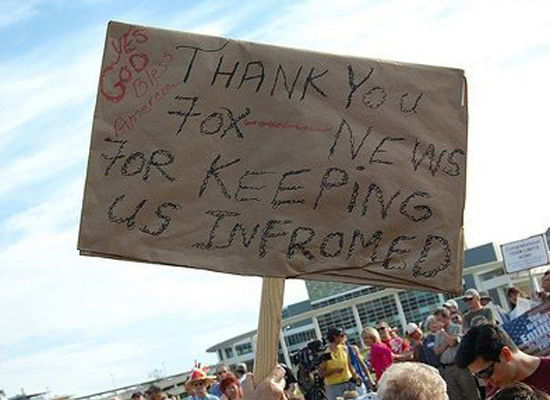
I admire this guest for not letting the Fox News reporter depict him as a monster. He would not be pidgeon-holed and, rather, eloquently defended how religious rights are better protected with a secular state. He also called out the reporter on his mix-up of some basic facts.
Although this song was written in 1971 as protest anthem against the Vietnam War, somehow (in an age of tepid climate change talks by leaders with immense carbon footprints and swift citizen punches to Berlusconi's spray-tan, spray-hairline face) the frustrated tone of this song really continues to resonate. If you want to hear the melody, see the video starting at the 0:11 mark.
I'm sick and tired of hearing things From uptight, short-sighted, narrow-minded hypocritics All I want is the truth
Just gimme some truth
I've had enough of reading things By neurotic, psychotic, pig-headed politicians All I want is the truth Just gimme some truth
No short-haired, yellow-bellied, son of tricky dicky Is gonna mother hubbard soft soap me With just a pocketful of hope Money for dope Money for rope
No short-haired, yellow-bellied, son of tricky dicky Is gonna mother hubbard soft soap me With just a pocketful of soap Money for dope Money for rope
I'm sick to death of seeing things From tight-lipped, condescending, mama's little chauvinists All I want is the truth Just gimme some truth now
I've had enough of watching scenes Of schizophrenic, ego-centric, paranoiac, prima-donnas All I want is the truth now Just gimme some truth
Wouldn't it be wonderful if there were an obligatory test that could screen people's background knowledge and ban them from voting if they are completely unware of the policy agenda of the candidates they want to support?
The only glimpse of truth and insight is perhaps in the statement by the gentleman around the 4:05 mark: "Were no longer an exceptional country, were no longer the shining light…the beaconto the world of what societies should look to be, as far as freedom, we’re just another country"
This little movie won the Critic's Prize at Cannes and is turning out to be the independent movie awards' darling hit of the year. Director and Palestinian-American director Ms. Cherien Dabis graduated from Columbia University with a Master's in Fine Arts. Amreeka marks her debut feature. The story tells the tale of a Palestinian mother and son who immigrate to the United States in the early 1990s. The official movie website can be found by clicking here and I am including a trailer of the movie below.
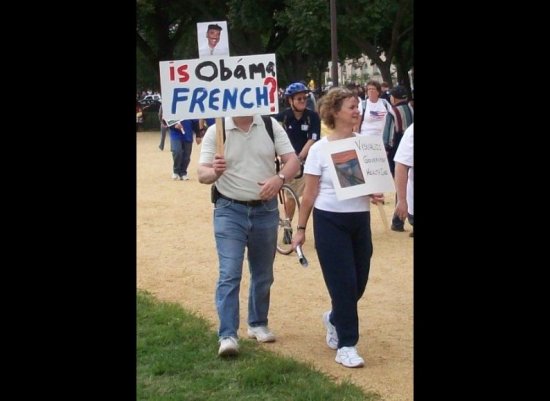
I have been pretty captivated by the growing birther movement in the United States surrounding the legitimacy of Barack Obama's birth certificate. A horribly outdated and hypocritical rule (look at Governor Arnold in California), in order to qualify as President of the United States, one must be born on U.S. soil. According to an article in the Washington Monthly, a new Research 2000 poll conducted for Daily Kos asked people if they thought Obama was born in the United States, with either a yes, no or I don't know response. Here are the results graphically by region. I'll leave this post with a great quote from an article on the subject by Bill Maher in the Los Angeles Times:
"So far, the reaction from Democrats is to laugh this off, and I understand why. If you seriously believe that President Obama is an African sleeper spy, get out of your chat room and have your house tested for lead.
But we live in America, and in America, if you don't immediately kill arrant nonsense, no matter how ridiculous, it can grow and thrive and eventually take over, like crab grass or reality shows about fat people....
Lou Dobbs has been saying recently that people are asking a lot of questions about the birth certificate. Yes, the same people who want to know where the sun goes at night."
sustainable urbanization - livable cities - international politics - fair trade - ethical and inclusive globalization - international development and cooperation - economic, social and cultural rights - slum housing rights - equal access for all to the arts
The Eternal UN Declaration of Human Rights
-
Jeremy Waldron assesses the Universal Declaration of Human Rights' enduring
relevance to establishing the ethics of global responsibility.