Skateboards. Girls. Madrid
Longboard Girls Crew from Juan Rayos on Vimeo.
In a groundbreaking article (and slideshow), newspaper powerhouse The New York Times, wrote a piece published yesterday on the labor situation in Kuwait, focusing on abuse of domestic female servents. The article also mentions that the US 2010 Department of State report put Kuwait, along with 12 other countries in low ranking for failing to do enough to prevent human trafficking. Furthermore, the article mentions the increased pressure that maids face during Ramadan, when they are expected to work longer hours.
KUWAIT — With nowhere else to go, dozens of Nepalese maids who fled from their employers now sleep on the floor in the lobby of their embassy here, next to the visitors’ chairs.
In the Philippines Embassy, more than 200 women are packed in a sweltering room, where they sleep on their luggage and pass the time singing along to Filipino crooners on television. So many runaways are sheltering in the Indonesian Embassy that some have left a packed basement and taken over a prayer room.
And in the coming weeks, when Ramadan starts, the number of maids seeking protection is expected to grow, perhaps by the hundreds, straining the capacity of the improvised shelters, embassy officials say. With Kuwaiti families staying up into the early hours of the morning, some maids say they cook more, work longer hours and sleep less.
Rosflor Armada, who is staying in the Philippines Embassy, said that last year during Ramadan, she cooked all day for the evening meal and was allowed to sleep only about two hours a night.
“They said, ‘You will work. You will work.’ ” She said that she left after her employers demanded that she wash the windows at 3 a.m.
The existence of the shelters reflects a hard reality here: With few legal protections against employers who choose not to pay servants, who push them too hard, or who abuse them, sometimes there is nothing left to do but run. The laws that do exist tend to err on the side of protecting employers, who often pay more than $2,000 upfront to hire the maids from the agencies that bring the women here.
The past week or so has been a great week for Gaza's kids. They beat their own Guinness record for the most amount of kites flown simultaneously, they set another record for the most amount of basketballs dribbled simultaneously and they also met MATT. Matt is one of youtube's earliest celebrity globe trotters. He basically became known for a compilation video he did of himself dancing in different locations around the world. UNRWA (The United Nations Relief and Works Agency for Palestine Refugees in the Near East), which places a huge amount of its work emphasis on the youth of Gaza, has coordinated all these activites. You can see a video of the kites, basketballs and Matt's cameo.
Please take the time to watch this video on the alarming situation of female domestic migrant workers around the world. Although it is meant to give a global perspective on the situation, and although abuses occur in all countries, rich and poor alike, much of the quick video highlights on abuse in the Middle East, particularly in Lebanon and Saudi Arabia. I can't post it directly to this blog, but I suggest you take a look. Here is the description from the HRW website:
Millions of women and girls around the world turn to domestic work in order to provide for themselves and their families. Instead of guaranteeing their ability to work with dignity and free of violence, governments have systematically denied them key labor protections extended to other workers. Domestic workers, often making extraordinary sacrifices to support their families, are among the most exploited and abused workers in the world.
I went to my first flamenco show since I arrived in Spain, called "Algo más que flamenco", playing at El Teatro Arlequín. The spectacle is meant to showcase the different regional dances of Spain, focusing on flamenco primarily but also giving us glimpses of the Zarzuela, Muñeira, Aurresku, etc.
I am including links to two articles from the Kuwait Times this week on different incidences of abuse against domestic workers in Kuwait. In other news, a proposal to Parliament to pay vulnerable domestic workers, whose salaries are often denied, directly into their bank accounts. This would serve as a positive step to further regulate wages and ensure compliance with salary payments. Let us hope it passes, enforcement is another issue.
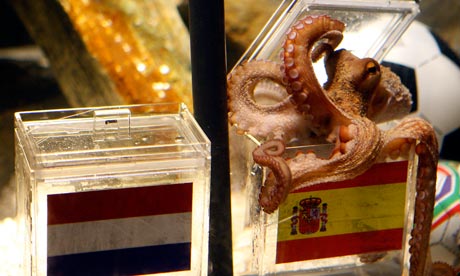
Paul the octopus set for sensational transfer to Madrid aquarium

Every now and then, a golden nugget of a freak article somehow manages to get published by BBC News. Scouting these news of the weird is like finding the toy in the cereal box for me. Behold one of the examples of beautiful journalism from last week.
Maggots falling from an overhead luggage locker have forced a US Airways flight to return to the gate at Atlanta airport.
"Bugs just began to fall out of the overhead compartment" causing panic on board, passenger Desiree Harrell was quoted as saying by Associated Press.
All the passengers were then asked to get off so crews could clean the plane.
The airline said a container of spoiled meat brought on by a passenger caused the delay of the flight to Charlotte.
Donna Adamo, a passenger on board flight 1537, said she first noticed a couple of flies when she got to her seat on Monday but did not pay much attention to that.
As the plane was taxiing, she said she heard a passenger behind her causing a commotion and refusing to take her seat.
"Then I heard the word 'maggot' and that kind of got everybody creeped out," Ms Adamo told AP.
Passengers were asked to get off because of a "minor emergency"
"All of a sudden, I felt somebody flick the back of my hair and on the front of me came a maggot, which I flicked off me.
But she said she "felt like they were crawling all over me because it only takes one maggot to upset your world".
"And as they're telling us to stay calm and seated, I see a maggot looking back at me and I'm thinking, 'These are anaerobic, flesh-eating larvae that the flight attendants don't have to sit with.'"
Ms Adamo said the pilot then announced that he had to return to the gate because of a "minor emergency on board".
The plane was cleaned and then continued on to Charlotte.
However, the unnamed passenger who brought the spoiled meat in a carry-on bag was put on another flight, US Airways spokesman Todd Lehmacher said.
It was not immediately clear how the passenger managed to take the meat on board.
Who is this woman with an afinity for musical instruments? What is she singing about? Any leads?
I just finished watching Michael Moore's latest documentary and his commentary on the 2008 Financial Crisis. What Moore does best, in my opinion is not in his deep fact research or his witty megaphone antics outside headquarters, but rather, in the way he is able to narrate a story and string together biographies or normal, average, American families just trying to get by. He is able to adapt himself and weave his life story in order to get more "street cred".
BP has a way with words. Check out one of its new youtube press releases, followed by a turtle rescue team member who claims BP is burning the animals alive.
Spain's senate has narrowly passed the "burka ban" in public spaces, a topic that has united party lines. While, no, I am not in favor of the burka, I do find the fact that this is occupying such an exhaustive amount of public time ridiculous. Like I said before, there are a whole host of more substantive public policy agenda items that would be a better use of time to work towards female empowerment of migrant Muslim women.
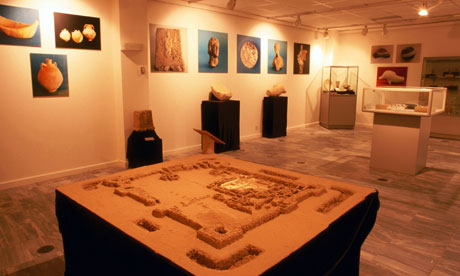
The Guardian put out an article describing the many important pieces of artwork and historic treasures that were scavenged during the Gulf War. The first part of Martin Chulov's article is below:
In a spacious but frugal office in Kuwait, a glossy catalogue lists the dozens of reasons why Kuwait and Iraq are still at daggers drawn after all these years.
Sheikha Hussa Salem al-Sabah thumbs through the pages of the booklet, pointing out the most egregious cases – page upon page of priceless treasures looted by Saddam Hussein's invading army 20 years ago and still missing: a dazzling 234-carat emerald the size of a paperweight; a slightly smaller gem inscribed with exquisite Arabic calligraphy; Mughal-era ruby beads.
"The Iraqis still don't understand the damage they did to us, not just financially, but for our souls," says the daughter-in-law of Kuwait's emir Sabah Al-Ahmad Al-Jaber Al-Sabah, who maintains the dynasty's heirlooms. "It was emotionally wrenching and still is."
Though many of the priceless treasures have been returned to the collection in the bitter decades since, up to 57 remain missing – perhaps lost for ever. At the National Museum across town, they report that the whereabouts of another 487 treasures remain unknown.
Many of the pieces, Kuwaitis believe, now form the core of private collections in post-Saddam Iraq and around the Arab world. To the victims of the 1990 invasion they remain the central reason of a failure to close the unfinished business of the first Gulf war – just as the second one is beginning to wind down.
In the seven years since Saddam was ousted, Iraq has been obliged to settle United Nations-prescribed debts of $43bn (£29bn), and compensations to private families totalling several hundred million dollars more, before being welcomed as a fully-fledged member of the so-called community of nations.
It is a burden that has proven difficult to bear for a brittle state still ravaged by war and chaos and deeply resentful of the fact that Kuwait was not invaded in the name of the current regime in Iraq.
To Iraq's wealthy southern neighbour though, neither 20 years nor the time after Saddam has diminished the desire to reclaim what was lost.
With a higher per capita income than most other Gulf petro-states, Kuwaitis remain sensitive to the claim that their residual hostility is all about getting even richer. "This is about principle," says Sheikha Hussa. "It remains a huge dilemma for us. The people here have a say in everything we do and the parliament does also. This is part of Kuwait's rights and we will continue to press them."


CaixaForum Madrid will be hosting an exhibition on free trade entitled "Comercio Justo. un producto, una historia" until August 28th. It will be accompanied by some interesting film screenings of related documentaries. Each starts at 7 pm. I am accompanying each with a link to its trailer. You can read the official press release, in Spanish, here.
22 de junio, China blue
El comercio justo:
El comercio justo beneficia tanto a productores como a consumidores. A los pequeños productores de zonas empobrecidas, les ofrece la posibilidad de vivir dignamente de su trabajo. A los consumidores, les proporciona productos de calidad y la garantía del respeto a los derechos de los trabajadores y al medio ambiente. Comercio justo significa:
- Salarios y condiciones de trabajo dignos.
- Igualdad entre hombres y mujeres.
- Ausencia de explotación infantil.
- Respeto al medio ambiente y apuesta por la producción ecológica.
- Beneficios destinados a mejoras sociales de las comunidades locales.
El comercio justo apoya a miles de familias campesinas de los países en desarrollo, a la vez que da a conocer al público de los países ricos la realidad, muchas veces desigual, del comercio internacional.


 Posts
All Comments
Posts
All Comments