IREX Blogging Workshop: Mafi Anglezi!

, | 0 comments

We live in Kuwait and the workshop has all the right to be conducted in the language of the people, however I wish it would have been written beforehand, or better yet to avoid confusion altogether, that the organizers had not sent invitations in English!


I left early.

Kuwait Regressing on Doing Business and Corruption

| 2 comments

If anyone saw yesterday's newspaper, The Kuwait Times mentioned two separate articles on Kuwait's fall in ranking on two different studies, one on Corruption by Transparency International (a study that I mentioned last week on my blog, and the other on the ease of doing business in Kuwait. Regarding corruption, the article wrote:

KUWAIT: According to the Transparency International's yearly Corruption Perceptions Index, which measures perceived levels of public-sector corruption in over 170 countries, Kuwait has regressed five places internationally. The index is published by Transparency International, an anti-graft watchdog, and is included in the organization's Global Corruption Report 2009: Corruption and the Private Sector that was released in Berlin on Wednesday.

Kuwait came in 65th place in the index, tied with Cuba, while it came in seventh place among Arab countries. Kuwait's position remained the same in their previous index after failing to make any new steps to fight corruption.
The article on doing business in Kuwait reported that:

KUWAIT: Conducting business in Kuwait has become more difficult in the last year, according to a recently-released annual report conducted by the International Finance Organization and the World Bank. The report, which assesses the ease of doing business in various parts of the world, shows that Kuwait's rank has been deteriorating. The decline in the rank by nine points could affect the competitiveness of Kuwaiti market to attract foreign investors, which might delay achieving the government strategy to t
urn Kuwait into an international financial and trading center.

The study titled 'Doing Business 2010: Reforming through difficult times' ranked Kuwait in the 61st position among 183 countries covered by the study. Kuwait has slid down from the 52nd position when compared to the study conducted the previous year. The ranking is calculated according to the average obtained from nine different factors that regulate business concerns in the country, and whether they affect business and their development.

The most alarming detail about Kuwait's "doing business" status is the 'starting business' category, which looks into the number of procedures necessary to open a business, in addition to the cost of these procedures and the time range during which they can be completed. In this rank, Kuwait occupies the low 137th position, diving down from the 134th position back in 2009.

Professionalism in the Workplace

, | 0 comments

Due to my recent (mis)treatment at a service counter at a company that I prefer to remain anonymous, I began to wonder if anyone might know of businesses/workplaces in Kuwait that sponsor gender training workshops to help males and females treat each other as colleagues in the working environment, as well as with how to deal with clients in a more professional manner. Any such example of this kind of training or orientation that anyone knows of?

BBC News: Moroccan efforts to replace slums by Malcolm Borthwick

, , | 0 comments

(link here)

Think of Casablanca and most of us imagine Humphrey Bogart and Ingrid Bergman's epic wartime love affair.

But this sprawling port city of more than three million people is also home of some of the largest slums in the Arab world.

The rising young population, and growth in rural urban migration, has put pressure on housing, in cities such as Casablanca.

Larbi Adri, a Moroccan electrician, showed us around the Casablancan slum where he lived for 10 years until a few weeks ago.

It is early afternoon and many of his friends are hanging around here, because they don't have jobs.

Unemployment is high, and without a steady job there's little hope of escaping the squalor.

Larbi took us to a pile of rubble where his shack used to be. It was demolished as part of the government's ambitious plans to rid the country of its shantytowns.

"The conditions are bad, there's rubbish all over the place," he says.

"They set the rubbish alight, so there was always the smell of smoke.

"My children had no place to play and when it rained the water came inside the house. It's not like living in a house, there is nothing here."

But Larbi is one of the lucky ones.

After this tour of his old home, he took us to his new three bedroom apartment, which he's just moved into with his wife and two children.

It's clean and spacious, and although close to the slum where he used to live, it's a world apart.

'Cities without Slums'

And most importantly, because it's subsidised, he can afford the mortgage payments of $125 (£77) a month, which is about a third of his income.

"The reorganisation of informal housing is part of the government's programme 'Cities Without Slums'," says Ouafa Messous, an urban planner at the Ministry of Housing in Morocco.

This is the type of success story that the Moroccan government is trying to build on.

"Its objective is to improve the condition of 298,000 homes. We're investing over $3bn in the project, and so far 138,000 people have been moved from informal to formal houses."

The scale of the project is huge, which is why the government has brought the private sector on board.

BMCE Bank, which is one of Morocco's largest lenders, specifically targets people who don't own property, and customers who have irregular incomes, such as taxi drivers and carpenters.

It's a growing business for the bank, which has about 9,700 mortgages for people moving into low cost housing.

It may seem surprising that lending to sub-prime customers would be an attractive proposition after the financial crisis.

But it is for Morocco's banks, according to a BMCE Bank spokesperson, who said the government secures up to 70% of the value of the loan, and that the bank reduces its risk by only lending up to 40% of a customer's income.

Able to pay?

The other major opportunity in low cost housing is for developers.

Just a stone's throw away from where Larbi used to live, Addoha is building tens of thousands of low cost apartments.

While many developers in the Arab world are posting shrinking profits and putting major construction projects on hold, the Moroccan developer Addoha is doing the opposite.

The developer says there's a shortfall of around one million low cost houses which need to be built in Morocco.

And with the help of government subsidies and tax breaks, the company is building more and more of them, and increasing its profits.

But when it comes to low cost housing, the margins are thin, which is why developers need to rely on economies of scale.

"Our strategy to make this profitable starts with buying the land," says Abderrazak Waliallah, deputy general manager, of Addoha.

"The bigger the land, the cheaper it becomes. A second thing is that we take land that needs some work, so it's cheaper.

"Also because we are buying in bulk, we can negotiate good deals with contractors and get the best price."

But the problem does not end with matching supply and demand, according to Fouad Ammor who's a Moroccan economist based in Rabat.

"The problem is, to what extent will those in need of housing be able to pay for it?" he says.

Addoha's low cost apartments, which sell for around $25,000, are still out of the reach of many.

'No safety net'

Mounia - who lives in the same slum as Larbi used to - told the BBC she feels trapped.

Workers building new apartment buildings
The government says 138,000 people have got new homes so far

She lives, eats, sleeps and wakes in a small room with her husband and two children. The room is about the size of most people's kitchen.

Her husband sells clothes on the streets, and they cannot afford to take out a mortgage.

"I cannot pay $125 a month on rent," Mounia says.

"Sometimes my husband works all day and he doesn't earn even one cent; sometimes he doesn't sell any clothes and we need to buy food - so how can we save $125 a month?"

This was a common story among the people we spoke to in the slums of Casablanca.

Some said they couldn't afford to pay the deposit for a mortgage, others that they were concerned about being relocated miles outside town.

Others said they'd rather stay in the slum with free accommodation, electricity and water, than risk falling behind on mortgage payments.

There's also a strong culture of home ownership in Morocco, which means that many people are reluctant to rent an apartment.

"We don't have a social safety net here, so when people are jobless you have no income unless you have income from a family member," according to Fouad Ammor.

"There is a big problem of insecurity here. When you have a house your needs are narrowed. You are secure, more or less."

The Moroccan government has helped hundreds of thousands of people move from the slums into low cost housing, and bringing in the private sector has helped accelerate its plans to create cities without slums.

But many of Morocco's poorest people cannot afford even low cost housing and so feel they have been left behind.
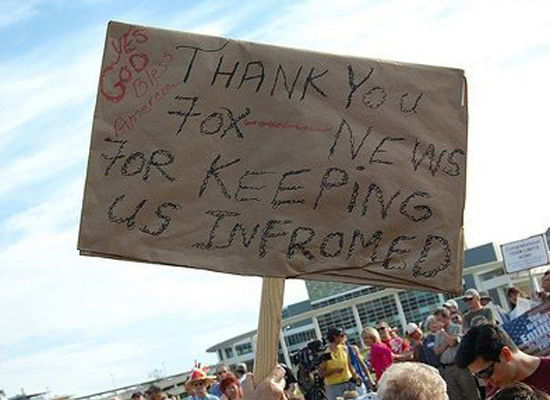
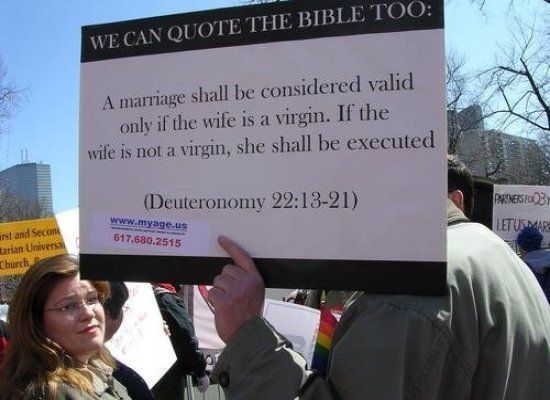
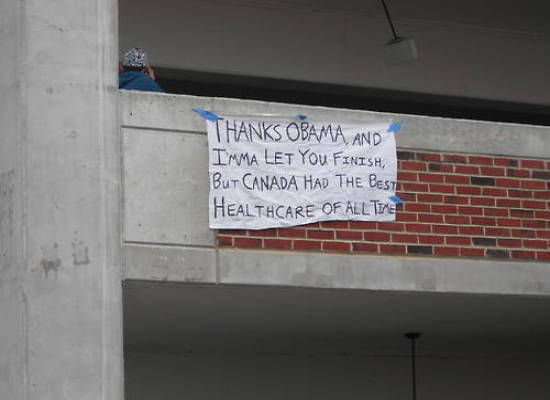
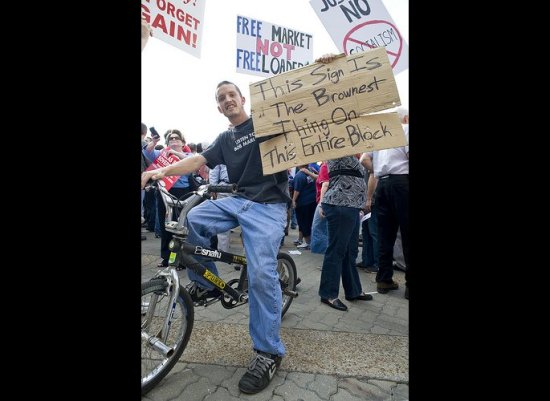
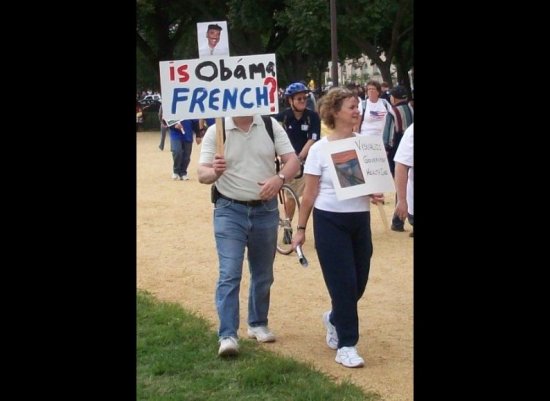
Huffington Post: Funniest Protest Signs of 2009

, | 0 comments

Here is the link to the entire slideshow.


"Word"

"Polly Vous Francais"


Kuwait Blogger's Workshop

, | 0 comments

Host:
Type:
Network:
Global
Date:
Monday, September 28, 2009
Time:
7:00pm - 10:00pm
Location:
Marina Hotel
Street:
gulf street, marina crecent
City/Town:
Kuwait, Kuwait
Phone:
96566189918
Email:

30 Mosques in 30 Days Project

, , , | 0 comments

Two Muslim-Americans, Aman Ali and Bassam Tariq, got to better know the Muslim Community in New York by going to a different mosque to break the Ramadan fast for each day of the holy month. Its an interesting little blog and, since I have not really written anything on Ramadan (Eid Mubarak to all my Muslim readers, by the way), I think it is nice to highlight on this sort of journey. Check out their website documenting their visits here.

2009 Global Corruption Report by Transparency International Now Available

, , | 0 comments

I would like to obtain a copy of this, as the theme for this year is Corruption and the Private Sector, and I am quite curious as to what has been found for the Gulf region, but it does not seem available by download from the website. However, I am including here some information about the theme for this year's report:

Transparency International’s Global Corruption Report 2009 (GCR09) brings together leading scholars, business practitioners and civil society experts to examine a broad range of persistent and emerging corruption risks for business, assess the efficacy of existing remedies, and propose
practical and innovative measures to strengthen and future-proof corporate integrity.

Topics covered include:

  • Corruption inside the enterprise: responding to
    corporate fraud and conflicts of interest.
  • Needs-tailored strategies: addressing corruption risks in SMEs, high-risk industries and privatisation programmes.
  • The state of play in compliance, reporting, codes and regulation: what works, what doesn’t,
    what’s next?
  • Holistic corporate integrity – aligning values, incentives and market signals: engaging owners,
    lenders and gatekeepers.
  • New and emerging markets: compliance in a changing global economy.

6 October 2009: Iranian Art Photography at Sultan Gallery

, , | 0 comments

(Information provided from Al-Watan Daily)

The exhibition presents the work of seven photographers from three generations: Bahman Jalali and his Image of Imagination series, Sadegh Tirafkan and Mehran Mohajer with Multitude and Camera Rosea respectively, and of the young and vibrant generation of Iranian artists, Dadbeh Bassir, Mohammad Ghazali, Arash Hanaei and Babak Kazemi complete the group.


Opening night on October 6 at 7 p.m. For details call Tel: 24714325 Ext. 110, Fax: 24714301 or visit Sultan Gallery, South Subhan, Block 8, Street 105, Building No. 168.

Take This UN HABITAT Survey on Your City Planning

, | 0 comments


World Habitat Day is October 5th, 2009, designated by the United Nations. According to the UN Programme on Human Settlements:

The United Nations has designated the first Monday of October every year as World Habitat Day. The idea is to reflect on the state of our towns and cities and the basic right of all to adequate shelter. It is also intended to remind the world of its collective responsibility for the future of the human habitat.
On the website, there is a survey that anyone can fill out asking questions on personal views of urban planning in your city of residence. Please take the time to take it, link here. The survey website states:
The theme for this year’s World Habitat Day is Planning our urban future. Tell us what problems your city faces and how you would plan for a better urban future .


Op-Ed by Dr. Shamlan Yousef Al Eissa at Al-Watan Daily: Dealing effectively with the sponsorship issue

, , , | 0 comments

Interesting op-ed today warning about the dangers of placing recruitment in potentially corrupt public hands in Kuwait.

"The Minister of Social Affairs and Labor Mohammed AlـIfasi announced that the ministry intends to set up a nonـprofitable government authority to hire and sponsor overseas labor, instead of having citizens and companies as sponsors. He said that the ministry is also mulling over the possibility of allowing laborers to be their own sponsors. Explaining the system, he said that the authority will bring laborers to Kuwait and allocate them to the various sectors based on the requirements of the market. This is aimed at eliminating the need for residency dealers and companies that bring in laborers after charging them huge amounts of money and then set them loose on the streets without any work.

I commend AlـIfasi for his attempts in eliminating the practice of private companies taking advantage of overseas laborers, since they deprive them of their legal rights and also take advantage of the loopholes existing in the local labor laws.

I would however, like to caution the minister against setting up a new government authority to bring in expatriate labor, because the government authority will only be corrupt and unable to execute its responsibilities especially regarding overseas labor, since some employees at the ministry collaborate with residency dealers and they will abuse the law.

Employees in ministries are incapable of eliminating corruption and even indulge in thefts in coـoperative societies. They have also failed to monitor money and donations that flow into Islamic charitable societies and political Islamic institutions that are managed by religious parties." (click here for link)

New Online Guide to Kuwait

, | 1 comments

One of my friends sent me this link to http://www.kuwait-guide24.com . Its a fairly comprehensive website with a directory of a host of different pieces of information for people settling in Kuwait.

Cherien Dabis' "Amreeka" (2009)

, , | 0 comments

This little movie won the Critic's Prize at Cannes and is turning out to be the independent movie awards' darling hit of the year. Director and Palestinian-American director Ms. Cherien Dabis graduated from Columbia University with a Master's in Fine Arts. Amreeka marks her debut feature. The story tells the tale of a Palestinian mother and son who immigrate to the United States in the early 1990s. The official movie website can be found by clicking here and I am including a trailer of the movie below.


France Espouses Hapiness Economics in Development Indicators

, | 0 comments

Speaking at the last G20 summit, Sarkozy has adopted measures of happiness and joie de vivre into its calculations on how to measure France's progress. His change of heart comes after receiving recommendations from development economists Joseph Stiglitz and Amartya Sen.

However, some say that this kind of measurement might be aimed at making France, a country reknowned for its 35 hour work week,pleasant work/life balance and fanciful cuisine, look better than cold statistics would make it out to be.

According to the Telegraph:

He said: "A great revolution is waiting for us. For years, people said that finance was a formidable creator of wealth, only to discover one day that it accumulated so many risks that the world almost plunged into chaos.'

"The crisis doesn't only make us free to imagine other models, another future, another world. It obliges us to do so."

When the measures are adopted, France will move a step closer to the remote Himalayan kingdom of Bhutan, currently the only country in the world which puts happiness at the heart of government policy.

In Bhutan, the government must consider every policy for its impact on "Gross National Happiness". This has led to a ban on advertising, wrestling channels, plastic bags and traffic lights.

Mr Sarkozy told a packed hall at Paris' Sorbonne university the world could have predicted last year's economic crisis if it had looked at happiness, wellbeing and sustainability.

The French government is now planning to include many of the "happiness" indicators in its regular growth statistics.

Tupac in Kazakhstan

, | 0 comments

The Guardian: "Iran set to allow first transsexual marriage" by Robert Tait

, | 0 comments

Iran is set to allow what is believed to be its first transsexual marriage after the would-be bride asked a court to override her father's opposition to the match.

The woman, named only as Shaghayegh, told Tehran's family court that she wanted to wed her best friend from school, who had recently undergone a sex-change operation to become a man, but was unable to obtain her father's blessing, as legally required.

Now her father has agreed to permit the union on condition that the male partner, Ardashir, who was previously a woman called Negar, undergoes a medical examination intended to prove it would be a proper male-female relationship.

The case comes against the backdrop of Iran's notoriously repressive policies on homosexuality, which is illegal under the country's strict theocratic code. Gay rightsgroups have accused the authorities of executing homosexuals, although officials deny the charge.

The father's change of heart came after he was summoned to court to explain his opposition. He told the judge, Alireza Sedaghati, that he had been driven by "fear of humiliation".

"During the last several years, Ardashir came to our house many times and all the neighbours and relatives know him as a girl," he said.

"Now she has changed gender and turned into a man, I can't sit and watch my daughter's friend turning into my son-in-law."

But he relented in the face of his daughter's insistence that she be allowed to wed Ardashir.

"Ardashir and I have been together since adolescence and know each other very well. This familiarity can make us happy," she told the court.

Etemaad newspaper reported that the two had been friends for 12 years after meeting at school and had later studied at the same university, where their close relationship had been well known to fellow students.

After graduating, Negar changed sex under Iran's Islamic laws which deem transsexuals religiously permissible, in contrast to the blanket ban on homosexuality, which is considered a sin.

Iran carries out more sex change operations than any other country apart from Thailand after the late Ayatollah Ruhollah Khomeini, spiritual leader of the 1979 Islamic revolution, issued a religious fatwa approving the practice, which has government funding. Critics have suggested that some of those changing sex are not true transsexuals but gays or lesbians who feel forced into the operation by social pressure. (link to article here)

Postcard from Madrid

| 1 comments


Tomorrow evening I will be boarding a midnight flight to Spain for my long-anticipated vacation to Madrid and northern Spain to visit family. I will travel back to Kuwait September 11. Curiously, this is the second time I travel to Kuwait on September 11. I will try to keep posting when I can, and I will definately upload pictures upon my return.

NY Times: "Lost Boys of Afghanistan"

, , | 0 comments

"On the edges of a Salvation Army soup line in Paris, a soft-spoken Afghan boy told the story recently of how he ended up in Europe, alone.

The boy, who said he was 15 but looked younger, recounted how his family left Afghanistan after his mother lost her leg in an explosion in 2004. They spent three years in Iran, where he went to school for the first time, learning English and discovering the Internet. After his father suffered a back injury that made working difficult, the boy, who declined to give his name, headed west.

He spent two months working 11-hour days in a clothing sweatshop in Istanbul, he said. He was then smuggled into Greece, where he was forced to work on a potato and onion farm near Agros for nine months, finally escaping in the back of a truck. He reached Paris by train after nearly a year on the road.

“I want to go to school,” he said in English. “I would like it if I could be — it sounds like a lot to ask — an engineer of computing.” (click here for full link)

Kuwaiti Lad Climbs Mount Kilimanjaro for Cancer

, , , | 3 comments


An example of a young Kuwaiti man making a difference in the community. Bravo! This is a
press release from the Kuwait News Agency written by Ahmad Al-Rifaie:


Kuwaiti mountain climber Faisal Al-Nakib successfully climbed Mount Kilimanjaro, the highest point in Africa, in an attempt to raise awareness on cancer and how to prevent it.

Speaking to KUNA, Al-Nakib said that on July 3, he was able to reach the highest point on Mount Kilimanjaro along with seven contestants from different countries, out of a total of 19 who had begun the climb on June 26. He expressed his great joy at having succeeded in reaching the top.

"I was the first to reach the summit, and I was able to endure the harsh climate conditions - the severe cold and the difficulty breathing - during the eight hours of night climbing," he said. He noted that this was a great challenge for him, as Kilimanjaro was 5,895 meters above sea level. "My strong will and strong desire to succeed made me reach the top," he added.

He explained that 70,000 pounds were collected for the Orchid Cancer organization, aimed at raising awareness over this condition. "

Arab Times: "Woman nabbed for chewing gum on the first day of Ramadan"

| 5 comments

"A woman was arrested on the first day of Ramadan for breaking her fast by chewing gum. According to sources, security officers from the Hawalli governorate spotted the woman chewing gum at 5:30 am while they were on patrol duty. When they questioned her about the act, she said she had the personal freedom to do as she pleased. She was referred to the authorities and a case was registered." (link here)

Staring Night Series 6: Nectar Handprints

, | 0 comments

She was plentiful and sacrifice

gave everything to us

She ripped out her hair
as wailing mothers do.
Each stiff strand fell strong
into wheat stalks.

The milky tears hardened to rice.
the anguish matured into our grain.

Running her eyes over us
in one last time ritual
pinnacle of maternality.
She plucked them out of her head
pressed them in her palms
and released two dried dates.
One to fill each of our hands

before reaching within herself
pulling from her warm cavity
a glistening swollen honey pear.
pulsating where she no longer did.

our last taste of what created us
overindulged without reverence
and with too many hands at once.
the last bites' mouthfuls
a fraction of the first
but outlasting memory's deceit.

We try hard to remember her
as left, bereft children do.
A maintenance of impressions
and anxiety that her face
will become blurry
even if we close our eyes
and press them shut hard.

Jahra Fire Opens Up Op-Eds that Talk about the "Nature of Women" to Be Jealous

| 2 comments


This is from an Op-Ed in the Al-Watan Daily by Mr. Hamad Salem Al-Marri entitled "The Gory Aftermath of Overwhelming Envy and Blind Rage" that only belittles women more, and proves that many men are more than ready to let the example of one incident substantiate their patronizing beliefs on women. If its the responsibility of men to ensure the safety and well-being of women, explain to me why the Jahra groom was unemployed for seven years when he is only 25? Do you have an answer Mr. Hamad? All throughout the year, although in smaller scale, several women are killed through acts of rage and envy by their husbands as well, sir. Its not something inherent to the nature of a sex.

Islam teaches us that men are responsible for the safety and well being of women, since women, by nature, are more sensitive and tend to allow their sentiments to take control of their actions. However, Islam has never degraded women. On the contrary; it has given them all their rights and treated them fairly. Women are inclined to be emotional, which clouds their judgments and renders them to be unjust at times. In addition to that, women are known to be jealous. A woman feels threatened whenever any other woman comes between her husband and her.

How Many Hours Punched Does it Take to Afford a Big Mac?

, , | 0 comments

The Economist has published an blog entry entitled "An Alternative Big Mac Index" about a UBS study that looks how how many hours on average people in a city have to work to afford a Big Mac. This goes a little bit further than the purchasing power Big Mac index.


THE size of your pay packet may be important, but so is its purchasing power. Helpfully, a UBS report published this week offers a handy guide to how long it takes a worker on the average net wage to earn the price of a Big Mac in 73 cities. Fast-food junkies are best off in Chicago, Toronto and Tokyo, where it takes a mere 12 minutes at work to afford a Big Mac. By contrast, employees must toil for over two hours to earn enough for a burger fix in Mexico City, Jakarta and Nairobi.

Jad Choueiri (Dis)graces Us with Again with "Stop Popping Pills"

, | 1 comments

Jad Choueiri continues to help us explore strange new worlds, to seek out new life and new civilizations, to boldly go where no man has gone before into the depths of male waxed eyebrows, pancake flat messages, and as I mentioned before, the overall multiple depths of discrimination faced by the Beiruti club of beautifulpeopledom.

Again his embrace of the thing he is supposedly "denouncing" comes off ambiguous and confused, leaving us to wonder if he is on the side of the fence of saying no to drugs, if he is merely a musical Paul Revere alerting us that if you do drugs you might get caught by "cops", or if he is encouraging the drug/club scene through the ironic "don't" but really "do" push the little red button and pop the pills.

The sad part of it all is that people like him think that pushing conservative boundaries translates to this. It only gives authorities more reason to crack down on Arab night crawlers if you ask me. I have never witnessed such an empty vaccuum of a music video-and thats saying a lot for someone who survived the summer fluke "I Like Girls Who Wear Abercombie and Fitch". Is there no alternative?

Step One for Bringing Kuwait International Airport to International Status: Reform the Airport Visa Office

, | 1 comments

A country’s true level of modernization and development is most often measured not by the height of towers in the skyline or the width of its superhighways, but rather in simpler measures: how long and how many steps does it take to get things done?


Unfortunately, if we are talking about the steps it takes for international businesspersons and tourists coming into Kuwait to firstly understand the procedures to exit the airport and then to undertake them, Kuwait’s performance is abysmal.


Kuwaitis, on an individual level, pride themselves on welcoming people and receiving guests into their homes with open arms and with the highest detail of care. An analogy can be drawn to the importance of airports as institutions of reception into a country. One would not welcome their guests into the house through the backdoor or leave them waiting. Why should the airport be the same?


To give an idea of what happens once passengers arrive, foreigners holding passports that allow them to get their visa directly at the airport are given no indication on how to do so. There are no signs directing passengers smoothly from terminal, to the visa office and lastly through baggage claim and customs.


In fact, in most airports it is typical that luggage is claimed first, thus the natural logic of passengers is to proceed first to baggage claims, upon which they must instead go upstairs to the discreet corner where the visa desk is located. If they are lucky, they will find someone to help them understand this procedure, which is in no way logically obvious, however there is no one necessarily in charge of redirecting passengers.


The visa section requires that applicants pick up a sheet up paper to fill out located on the desk, take a number from an automated machine, and give their passport to a man who makes a photocopy. They must also present upon arrival the visa fee in Kuwaiti Dinars.


Many times, the visa officers give attitude to those who ask questions about what they need to do. However, it has never occurred to the airport staff to put a sign with all these different requirements in different languages before the desk.


Secondly, many visitors, once their number is called, have not yet picked up the form out of pure ignorance about the fact that one is needed. And why can´t this half-sheet form be distributed during the flight by the cabin crew to save time and explanations, as is policy in many countries?


The waiting time to be attended has never taken under and hour for me, often more time than the duration of my flight. I can never predict at what time to tell my colleagues to pick me up, because it is completely unpredictable. This is not how Kuwait´s premiere international transportation hub should function.

The biggest crack-line in the system is that as visitors are held up in the visa office, this means that their luggage on the conveyer belt goes unmonitored for up to hours at a time.
It is tossed aside in various corners of the airport baggage area.


One of the times that I flew into Kuwait, I had to wait 75 minutes in the visa office. I was nervous about my luggage being unattended for so long. Sure enough, even though my luggage was confirmed later by my airline company as having gotten on the direct flight to Kuwait, it was lost and to this day has never been recuperated.


Although I have no way to verify this, I can only deduce that it was lost or stolen from the Kuwait baggage area. Again, in many countries, baggage taken out of the airport is screened at customs to make sure the baggage ticket matches with the identity of the person. Why not Kuwait? And why do visitors have to wait to pick up their luggage in the first place. It would clear up space, save time and be more secure if it could be done before.


The inherent issue is not to figure out how to fix these “leaks” but rather a more existential question on the purpose of this visa desk in the first place. The desk has about a half dozen seats for officers, however, only a few of these are ever occupied at a time. Other countries in the region, such as Bahrain, United Arab Emirates and Lebanon allow you to pass customs and take the visa at the same time, in an efficient, timely, and most importantly a professional and business-friendly manner.


Many people and businesses in Kuwait pay large sums of money to have an escort accompany a passenger from the airplane to customs, bypassing the delays and tribulations of the visa procedure. Thus, a lucrative business would surely be threatened if procedures were streamlined, however in order for Kuwait to modernize its airport, it will have to simplify this bottleneck.


Airports are the first impression from which several observations are drawn by visitors, for better or worse. Ideas of how friendly a country is, conducive to good business, and its overall professionalism are based on these first marked experiences. The airport is undergoing fundamental expansion efforts with new construction projects, how in bureaucratic procedures, the airport is in dire need of reduction and transformation. People will remember the airport mostly by how they are treated, not by its facades.