Rain in Spain Series 1

, | 3 comments

Galileo Galilei and me were born on the same day, of the same rock

you coming in, you the Sun Kings.
the kind who would deliver a briefcase full of self-help books and power bars
Fur of a lion cub linted on your coat.
the natural instinct to make a promise without knowing how to meet it...
and impose, like a proud beast
you of heliolight and conquest, of bellicose brow and golden tongue
you suns around whom you know all revolves.
your welcoming, though ceding: a Roman welcome in peripheral lands
the spite spilt dries on the rocks.

The Kuwait Confession Box Effect

, | 2 comments

Recently, a new blog came to my attention: Kuwait Confession Box. I have to admit I am addicted, and I am glad to see that people are respecting the nature of the blog by writing seriously and not "pranking" the site with false anecdotes.


What strikes me the most so far about all the "confessions", is that for most of the anonymous entries, the writers tend to describe the same frustration: feeling of hypocrisy and self-hate for having to live a "double identity".

Many of the entries describe feelings of having to hide who they really are, feeling that they can't be true to themselves and still be loved and supported by their family, feeling that they have to live like liers, but all insisting that they are good people and even good Muslims.

To be honest, I feel sorry for these people. No one should have a society with such strict rules imposed that in order to comply by them, you have to live a double life. When you try to make a country so conservative, naturally what results is a Jeckyl and Hyde citizenry.

Good, average people trying to live their lives shouldn't be made to feel like they are criminals!

Death Penalty for Jahra Arsonist

, | 0 comments

The arsonist responsible for the Jahra wedding fire has been condemned to hanging, in a ruling presided over by Chancellor Adel Al-Saqer. If so, Nasra Yussef Mohammed Al-Enezi, aged 23, will be the first-ever Kuwaiti woman to be executed.


Nasra, the second wife of a man who was to be married, set fire by pouring gasoline and lighting to the women's wedding celebration tent on August 15 (ferragosto), leading to the deaths of 57 women and children. The couple shares two children, both of whom are mentally handicapped.

Al-Watan Daily had an interview with sociologist at Kuwait University, Dr. Ali Al-Tarrah, who eloquently weighed in the justice of capital punishment. Here are excerpts from the interview conducted by Shireen Sabri.

Are you in favor of death sentence as a deterrent to some crimes?
AlـTarrah: The idea of punishment is to deter society from wrongdoing; punishment is used to protect the rights of others. But recent studies have shown that death penalty has no real effect in the form of deterrence as statistics indicate the number of major crimes such rape and murder have not declined despite the fact that death penalty is practiced by the law in many nations across the world. So if the criminal is aware of the punishment and yet does not hesitate to commit these dreadful crimes, then obviously the deterrent is not effective. It is obvious that rapists do not really think rationally when they commit these crimes because they are usually overpowered by their sexual desire.

But many people believe in death penalty. What is your opinion on that?
AlـTarrah: Those who support death penalty think that it would deter criminals and rapists from committing crimes. So obviously we need to study the matter seriously and find out new deterrents that are effective. It is obvious that the large majority of people entertain the idea that serious crime should receive harsh punishment.

Others believe that stringent measures such death penalty should be applied because it would be the only way to appease the victim and his or her family. In some countries, more than 24 articles deal with death penalty which suggests that some countries have extended their definition of punishment and penal code. What was once introduced to curtail social irregularities is now used against those who reject political systems.

Many political activists have been executed not on grounds of rape or for a crime they commit but for disagreeing with the political system. So this means that those who support the idea of using death penalty are really saying that politically radical activists should be executed because society in not in need of them.

I believe that culture plays a pivotal role in this because we tend to seek revenge at all accounts. Meanwhile, many legislators have appreciated the motives behind honor killing and reduce the punishment from death penalty to serving years in prison. We all agree that when a person does an honor killing, he is killing another person. Just like in a homicide, when a person kills another person. And yet, the punishment for one crime is strict and for the other, it is not. The reason is the circumstances and motives behind each. It is clear that the matter is viewed from cultural point of view rather than criminal one.

But how do you explain that certain expats face death penalty?
AlـTarrah: We need to consider the type of workers coming to the country. Some resort to theft and robbery probably due to abject poverty. People on the street are terrified by criminals and therefore they demand to see the execution of the criminal publicly especially if victims are children. Some go as far as asking for chopping the criminal to pieces. Governments should not be acting like this manner. Therefore, I would say public execution is barbaric because it is not civilized or humane. I agree that it would have stronger impact as a deterrent but the criminal is doubly punished as he is psychologically tortured by the fact that he is presented before masses that see how he breathes his last breath.

(To view original article, click here)

Old Song

| 2 comments

My student showed me this video. Does anyone know what it is talking about?

Criminalization of Dual Citizenship

| 0 comments

KUWAIT TIMES POLL

Should dual nationality holders be stripped of Kuwait citizenship?

Yes
Poll bar
41%
No
Poll bar
58%

Family Bookshop Salmiya

| 0 comments

It's really a shame they are so bent on demolishing Old Salmiya. I went today to buy a book in Family Bookshop and let me tell you the variety as well as the price is much better than any mega-store like Virgin.

India-Pakistan Border Stomp Romp

, , | 0 comments

Arabian Business: "Labourers living in homes 'not fit for cats and dogs'"

| 0 comments

Gulf states are seeking to buy people’s silence through state hand-outs while unskilled foreign workers are living in conditions “unacceptable to cats and dogs”, according to a leading Bahraini newspaper editor.

Dr Mansoor Al-Jamri, co-founder and editor-in-chief of Bahrain’s daily Alwasat newspaper, drew loud applause at Qatar’s BBC televised Doha Debates with his comments.

He said: “The governments have a philosophy based on oil wealth, but instead of letting it trickle down to the people they use it to silence the elite or to by-pass their citizens.”

He added that in Bahrain the average salary in the private sector had dropped by 15 per cent in recent years and more than half the population had been waiting to be housed since 1992.

Speaking of the wretched housing which so many foreign workers from the Indian sub-continent endure in Gulf states, Al-Jamri said they had to live in conditions “that cats and dogs would not accept.”

He warned that if these workers, who make up the vast proportion of unskilled labour, continued to be treated like third class citizens, their inability to share in the decision-making process or have a right of domicile would ultimately lead to the intervention of international bodies in the affairs of Gulf states.

Al-Jamri was speaking at the latest Doha Debate, a unique public debating forum in the Middle East, whose 350-strong audience voted 75 per cent to 25 per cent in favour of a motion that “Gulf Arabs Value Profit over People.”

He told the mainly Arab audience attending the debate, to be broadcast on BBC World News on November 22-23, that token trade unions existed in Bahrain and Kuwait but that they were deprived of powers of collective bargaining and the protection of international labour organisations.

“I am always hearing in the media and from officials how this is not the right time for the participation of the people. They say: we will give you free education and free housing, but just shut up and don’t criticise.”

His colleague on the panel, Dr Najeeb Al-Nauimi, a former Qatari Justice Minister and later lead counsel defending Saddam Hussein in Iraq, condemned governments which summarily deport not just unskilled, foreign labour but teachers and sometimes doctors.

Al-Nauimi decried the lack of compassion towards a labour force which builds extravagant construction projects on meagre salaries with minimal social benefits.

“Oil prices and cheap labour are the basis of our economies,” which depend in turn “on the silence of our citizens,” he said.

Al-Nauimi warned that the Indian sub-continent was forging ahead by opening up its societies to a working, middle and upper class with rights. “We are (just) citizens of the Gulf and represent a marginal class, marginalised by the political process.” (for full article click
here)

BrasiBolly

, | 0 comments

This is what happens when a Brazilian soap opera attempts to imitate an Indian drama...A strange lovechild indeed.

Book: Leaving Tangier by Tahar Ben Jelloun

, , , | 0 comments

Picked this book up at the Virgin Store in the Beirut airport while I was waiting for a connection flight. It is an easy read and I got through the entire book on my long flight.


It deals with a brother and sister who emigrate from Morocco to Barcelona. The brother basically catches the eye of a gay Spaniard named Miguel who goes to Morocco often for leisure and business. He creates a pseudo-job for the brother, who I think is called Azel (?), provided he live with him in Barcelona, be his lover and basically be at his beck and call.

Meanwhile, the brother convinces Miguel to marry his sister so that she may also come to Spain, which Miguel does, although there are no romantic feelings between the sister and the Spaniard. In the end, what the story highlights on are how different people deal with emigration into a foreign land, who ruins themselves in the process and who paves out opportunities for themselves. I wished that the story had created more dialogue between the three characters to show their interaction in greater depth, but in the end it was a page turner.

United Nations 2012 World Urban Forum to Be Held in Bahrain

, , , | 1 comments

Why is this most important? Besides the obvious factors for the Gulf, one of the biggest benefits is that this will give a chance for Gulf Youth to participate and be active. For each World Urban Forum, there is a World Urban Youth Assembly that precedes it. Here is the UN HABITAT press release, closing the 2010 World Urban Forum.

The Fifth Session of the World Urban Forum drew to a close in Rio de Janeiro on Friday with speakers hailing it as the most successful one ever staged.

According to available statistics, some 13,718 participants from 150 countries around the world attended the Session. Secretary of State Mrs. Hilary Clinton of the United States was full of praises for the Forum saying it was a unique venue where people from different backgrounds shared ideas on how to cope with the challenges of urbanization.

Mrs. Clinton who addressed the closing ceremony via a video message said the work of UN-HABITAT in addressing urbanization challenges was crucial adding that there was a greater need to foster private public partnerships in addressing those challenges.

In her speech, UN-HABITAT Executive Director Mrs. Anna Tibaijuka challenged the Forum participants to think long and hard on the kind of future they wanted to leave behind for the generations to come.

“How will our world look in just two generations to come when it is projected that 70 percent of humanity will be living in towns and cities? What percentage will continue to live in abject poverty? How much dirtier will cities make our planet? As we also learned this week, the means to bridge the urban divide are not lacking. We must, however, muster the political will to make our cities fit for our children, and the time to act is now!,” she said.

Mrs. Tibaijuka who leaves UN-HABITAT later this year at the end of a her second term at the helm, said she was walking away with her head high having managed to give the agency a footing, as requested of her by the former UN Secretary General Mr. Kofi Annan when he first appointed her to the post.
In his address, Brazil’s Minister for Cities Mr. Marcio Fortes said the success of the meeting could be gauged in the fact that most of the time, the meeting rooms were turning away some participants because of being fully packed.

During the occasion, the government of Bahrain, the hosts of the Sixth Session of the World Urban Forum in 2012, gave a presentation highlighting what delegates at the meeting are to be offered.

Staring Night Series: Annual Birthday Poem

, | 0 comments

Posting a little late

A 14 February heart
a pulse into the 15th
propeller of birthdays

mechanism inducing age
push slinky "what
walks downstairs
alone or in pairs"
momentum of the years

collapse, coil,
collect deep at 11:59 pm
& expand out at 12:00 am

the birthday compression between
the force and the flick of the hands

Floating Down

, | 2 comments

Hi everyone, sorry for the long winter of silence, but I have been around the Middle East, and in an undisclosed country in South America, yes its true. I have a big announcement to make soon, in seven days. In the meantime, I just found out that one of my favorite artists M.I.A., will be coming out with a new album in summer 2010. Check out a potential song here. Lets all turn off the lights and celebrate Earth Hour.


Op-Ed Reaction to Khalil Ali Haider: "The Spaniards Do Not Want to Learn Arabic"

, , | 3 comments

As a person teaching Spanish to some of the most diligent, interested Kuwaiti students of the language, I couldn't help but being intrigued by this op-ed. I agree with Mr. Khalil on many points. Spaniards are very lazy at learning languages, and can't seem to be bothered. Arabic, unfortunately, is just another victim to this. More critically, however, the Spaniards don't want to learn English either. Spain has one of the lowest rates of English fluency in the entire European Union. Its really a national embarrassment for me. To be honest with you, before promoting any other second language, English needs to be invested in heavily in Spain to bring the country's citizens to international standards regarding understanding of the English language, perhaps then we can focus on other foreign languages, such as the author writes, Arabic or Chinese.

Spain also has an integration problem. In comparison to other European countries, Spain has only recently had waves of migration into the country, and its immigrant population is still relatively new. How Spain is able to integrate the children of these first-generation citizens, will depend on how well Spain can educate its people on multiculturalism, tolerance for diversity and battling of racism--which is, unfortunately, notoriously horrible in Spain, as many national public embarrassments during several international sporting competitions can attest. For a long time, Spain was an immigrant-exporting country, and the people must never forget this fact in their discussion of integration and migration in the present day.

Now, regarding the promotion of the Arabic language, something that perhaps the promoters could learn from. Spain has what we might call soft or cultural diplomacy, in the form of El Instituto Cervantes, a center for Spanish cultural promotion and language abroad. They have offices all over the world. This is similiar to perhaps the British Council. Why not begin one focused on the Arabic language?

Last month, a Spanish citizen poured icy cold water on the Arab-Spanish cultural relations and at the same time offered it a beautiful rose. On Jan. 1, 2010 Al-Sharq Al-Awsat newspaper reported that the local government in Andalusia Province's latest bill to teach the Arabic language as a second foreign language in educational institutions was met with strong oppositions.

The newspaper's correspondent Subaih Sadiq said that the bill aims at integrating Arab and Roman immigrants into the Spanish society. The concerned committee suggested allocating 25 million euro until 2013 to implement the proposal. The bill suggests teaching Arabic as a second foreign language in the Andalusia Province and urging educational institutions to open Arabic departments. 400 opponents commented on the bill through an electronic newspaper.

Some said that: "Teaching Arabic will not benefit them. The government should encourage studying Spanish instead." Others said: "We have always been studying English and French and now they want to teach us Arabic?" Others said: "There is no doubt that studying languages is important but what is the point of studying Arabic? All those who come to our country should study our language instead of teaching us their language." An extremist said: "I hope that Catholic rulers could be in power to dismiss them again."

Two days later, there were several calls to cancel the Official holiday of Granada on Jan. 2 which was the day when the last Arab kingdom in Andalusia fell in 1492. Granada celebrates the occasion at official and public levels. The Granada Society has announced that it would organize a celebration for dialogue among civilizations and against the fall of Granada as well as to honor the Gypsies, Jews and Arabs who were dismissed from Andalusia.

The Andalusia People's Society issued a statement in which it said: "We want to express our rejection of celebrating the fall of Granada and we call for cancelling this celebration and to replace it by June 26 as the National Day of Granada, which was the day when Maryana Beneida (1804-1831) was executed. Maryana was known for her opposition to oppression and autocracy in Madrid. (Al-Sharq Al-Awsat 3/1/2010).

If there was a proposal to teach the Chinese language in Spain, would the responses of Spanish authorities be the same? I don't know. Many schools in the US, and perhaps in Europe, encourage teaching Arabic. It is said that the annual salary of a translator working for the US forces in Iraq and Afghanistan is more than 180,000 US dollars. In the past we used to fear the Europeans who studied Arabic. Nowadays, the new generations in Europe have no interest in learning Arabic.
(link here)

Olympics

, | 0 comments

I am a diehard fan of the Olympic Games, although the time zone difference is costing me my loyalty to these Vancouver games. I am sharing with you a part of the opening ceremony for the Athens Games in 2004, not only one of the best opening ceremonies that I have ever seen, but I think also up there in the top 5 visual experiences of my entire life. It truly blew my mind, and I was lucky enough to see it live on the television in 2004. This is amazing, just try not to cringe from the commentary delivery.


Love

| 0 comments

I hate to get preachy, but being the day of love, love yourselves, love your neighbour, love your earth.

Sarah Palin and the Hillbilly Palm Pilot

, , | 0 comments

Sarah Palin wrote her notes on her hand during the recent Tea Party Convention in Tennessee. You can see written that it says:

Energy
Budget (crossed out and replaced with "tax") cuts
Lift American Spirits


Get Out of Bribes Free

| 0 comments

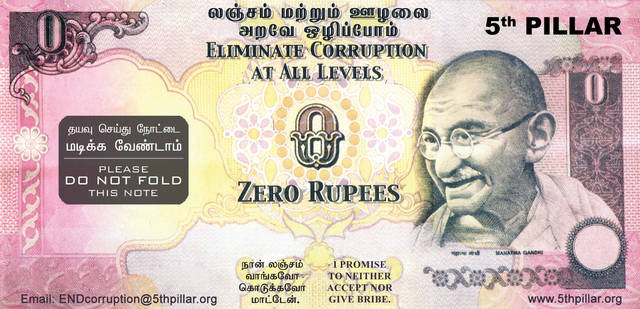
Excellent rupee "no-corruption zone" note to pass to officials attempting to get a bribe out of you. Click on the image to see the full size.

New Indian Show on 98.4 Mix FM

, | 0 comments

Just read in the news that Kuwait 98.4 FM is going to have a new show dedicated to Indian film music and entertainment news, 6 pm on Friday. I am so excited!!
फिर भी दिल है हिन्दुस्तानी!

BBC: "France refuses a citizenship over full Islamic veil"

, , | 0 comments

The French government has refused to grant citizenship to a foreign national on the grounds that he forced his wife to wear the full Islamic veil.

The man, whose current nationality was not given, needed citizenship to settle in the country with his French wife.

But Immigration Minister Eric Besson said this was being refused because he was depriving his wife of the liberty to come and go with her face uncovered.

Last week, a parliamentary committee proposed a partial ban on full veils.

It also recommended that anyone showing visible signs of "radical religious practice" be refused residence permits and citizenship. (link to article here)

'Integration'

In a statement, Mr Besson said he had signed a decree on Tuesday rejecting a man's citizenship application after it emerged that he had ordered his wife to cover herself with a head-to-toe veil.

"It became apparent during the regulation investigation and the prior interview that this person was compelling his wife to wear the all-covering veil, depriving her of the freedom to come and go with her face uncovered, and rejected the principles of secularism and equality between men and women," he said.

Later, the minister stressed that French law required anyone seeking naturalisation to demonstrate their desire for integration.

Mr Besson's decree has now been sent to Prime Minister Francois Fillon for approval.

The interior ministry says only 1,900 women wear full veils in France, home to Europe's biggest Muslim minority.

In 2008, a French court denied citizenship to a Moroccan woman on the grounds that her "radical" practice of Islam was incompatible with French values.

Wednesday's Picasso

, , | 0 comments


How to Measure the Urban Kindness of Strangers

, | 0 comments

This man got strangers to physically carry him on his back up 9.4 miles of the grand Manhattan Isle. He wanted to debunk the myth that New Yorkers are unfriendly. Well, I wish they would do this experiment in Paris, where I found myself once lugging 50 kilos of luggage up and down the Paris metro stairs for several hours to get from one side of the city to the next, with no elevator or escalator in sight. I fell two times and no one stopped to help me except for immigrant women. It would be an interesting experiment for Kuwait? Who wants to place bets on how far someone could get?

Op-Ed by Hamad Al Sanan at Al-Watan Daily: "Taking Pride in Being Muslim"

| 0 comments

I understand the author's concern with ensuring unity and not creating secterianism, although I think, on a theoretical level at least, that a country's diversity can be its strength, not its weakness, and that unity must not equate conformity or denying ones' identity--and identity has many rungs of allegiance, not necesarily mutually exlusive. A person defines themselves in different ways relative to their context. In my home region I define myself by my town, in my home country, by my region, in the world by my nationality. We define ourselves as many things: mothers, sons, bosses, Hindus, conservatives, A positive, students, Kuwaitis, Failakers, men, women, citizens, brothers, sisters. We are all these, all at the same time.

Nonetheless, reading this article got me seriously reflecting on the meaning of "pride". Does pride infer superiority, or a belief that you are "better" than others? This never factored into my definition, and I began to start double-guessing myself. Read the op-ed and find below the dictionary answer of "pride". Also, the magnefying glass of scrutiny that has been given to the female MPs has been astounding, belittling and targeting their personal lives in a way that flabbergasts me and is utterly devoid of any sort of reflection on what they should be judged for: their policy and performance.

When a Muslim says that he is proud of being a Muslim, it means that he believes that his religion distinguishes him from the followers of other religions. It is also normal for a man to say that he is proud to be a Kuwait or Emirati because he believes that his country is distinguished from other countries on certain issues. But I cannot understand how a female MP could dare say: "I''m proud of being Shiite" while she holds a PhD degree and represents her people who elected her because she doesn''t support sectarianism.

This statement means that the MP actually meant to say that she belongs to a sect which is better all other sects. Some people resort to flattery to hide a certain fact for a while but soon the facts appear on the surface. This fact shocked colleague Fuad AlـHashem who wants Kuwaiti citizens to be just Kuwaitis without any sectarian or tribal affiliations. I think that AlـHashem also wonders how a graduate from the Colorado University who has specialized in political science can issue such a statement. What sort of reactions can we expect from the general public? Has this statement got anything to do with patriotism?

This female Shiite MP might have the right of being proud of being Shiite but I think that announcing this in public only strengthens sectarianism. A friend of mine has told me that his son''s classmate in the second grade asked him: "Where do you place your hands when you perform prayers?" I wonder how such an innocent child can ask this question. Ali AlـMatouk has published a statistical report which shows that there are 700 million Shiites in the Islamic world. He had earlier published a study indicating that Shiites represent 60 percent of the Kuwaiti population. I don''t actually care about such inaccurate statistics, but the question is: "What is the aim behind publishing such statistics at such a volatile time?"

When a certain community introduces exaggerated statistics they aim at proving that they are not a minority and thus demand more rights or even selfـgovernance as the case of the Chinese community in Malaysia. I don''t think that Ali AlـMatouk considers himself belonging to one of such communities. This talk also strengthens sectarianism.

I''m not calling for Shiites to become Sunnis or vice versa but I''m calling for an end to the conflict existing between the two doctrines because such conflicts weaken Islam. Let us all agree on how to differ but not how to fight each other. We should strengthen our sense of belonging to this land. Let us be proud of being Kuwaitis and not for belonging to the Sunni or Shiite sects.

Superiority is a corrupted form of pride, just as opportunism is a corrupted form of assertiveness perhaps, but to turn to Merriam-Webster:

PROUD

1 : feeling or showing pride: as a : having or displaying excessive self-esteem b : much pleased : exultant c : having proper self-respect
2 a : marked by stateliness : magnificent b : giving reason for pride : glorious est moment in her life>
3 : vigorous, spirited
4 chiefly British : raised above a surrounding area

I like the idea that proud just means a proper self-respect. And remember, its only until you respect yourself that you can get respect from others.

Message from Oxfam: Where Does the Oil $ Go?

| 0 comments

Bidoon of Bidoon: Stateles of Stateless

| 0 comments

Really, this is an excellent article by Ahmed Saeid entitled "Bedoons in Predicament" on the Bedoon issue, taking a careful look at the many legal loopholes, citizenship scams and overall endless bush maze of barriers that people with Bidoon status trying to seek something better for themselves face. I myself have heard similar personal accounts to corroborate the anecdotes in this article by the various people interviewed. Normally, I only quote the first couple paragraphs of a long story and allow the reader to click on the link to read the entire article, but I am including it all here. It is wonderful that the legal hitches are looked at through an angle emphasizing the human cost of these traps.


KUWAIT: While discussion on the bedoon's civil rights draft law in the National Assembly was postponed yesterday due to lack of quorum (for the second time in a row) nearly 100,000 bedoons (stateless persons) continue to fight a 'paper war' in a bid to reflect their physical existence on legal dossiers. Some bedoons think that the government and the National Assembly have been deferring this issue for decades now, and that this 'intentional' policy has pushed some toward facing perpetual hardship.

While many bedoons continue to face the 'regular' difficulties that accompany statelessness, others face a unique situation - they are neither considered to be stateless nor citizens of any country in the world!

The problems of this segment of people begin with being stateless or not belonging to any country. Khalifa Al-Utaibi, Spokesman of the Gathering of Kuwaiti Bedoons, said the Kuwaiti government had founded the Executive Committee for Illegal Residents (ECIR) to naturalize the stateless. This was done so that the government could later claim that they are not stateless but 'illegal residents' who conceal their true nationality.

We have to seek the committee's approval to do any paper work," Al-Utaibi said. "And when we go there, they give us an approval letter stating the citizenship they have conferred on us. In order to receive the approval, you have to sign an pledge stating that you are a holder of a particular nationality. Otherwise they will not allow it," he said.

Al-Utaibi adds that he had once approached the ECIR to seek approval. He was told that he was of a Saudi origin. "I told them okay, I agree. I'll be proud to admit that I am Saudi. Where is my Saudi passport? Can you please give it to me so I can at least obtain a birth certificate for my daughter? They told me "that's your job to find out, not ours." These are the kind of procedures they impose on us," he laments.

According to Al-Utaibi, Kuwaiti government has been imposing pressure on the stateless people since 1986. "We face such restrictions every day," Al-Utaibi said. "We have to struggle to register marriages, register the birth of a child, issue a death certificate. Any kind of interaction where paperwork is involved is a painful experience for us," he explains.

Al-Utaibi took the point further arguing that the only way bedoons can contract marriages is through the help of court orders. The groom files a suit claiming to have had illegal relations with the bride. The judge then issues an order legalizing their marriage contract.

Supporters of these measures argue that they are rewarding. A large number of bedoons have 'adjusted' to their situations and 'recovered' their original passports. The consequences of these restrictions are showing up in far more complicated, inhumane situations.

As one of the aftereffects of this policy, a group of people have now been rendered non-bedoon. They are not citizens of any other country in the world. There are no definitions to describe them; they are simply 'nameless.' They are widely referred to as 'stateless of stateless' or bedoon of bedoon and face dead ends. In addition, they face the misfortune of having to 'come up' with a passport in order to survive.

Abu Abdlallah, a father of six children in his forties, is a former bedoon. Owing to a number of complications, including difficulties related to issuing birth certificates for his two youngest daughters, he had to buy a Syrian passport from a company that had placed an advertisement in local newspapers in 2001. He said that he paid KD 6,000 for the passport, which he then submitted to the ECIR. After doing so, he was able to obtain residence permits for himself and family members. He also obtained other forms of identification and a driving license.

The problem began when my passport expired in 2007," he said. "I went to the Syrian embassy to renew it and they said that they need to consult the Syrian ministry of interior before issuing a new passport to me. After some time, embassy officials told me that the Syrian government does not have any record of our details, and that it does not consider us to be citizens of Syria at all. They took our passports and gave me a paper stating that we are not Syrian citizens," he added.

Abu Abdallah' s life has since, turned tragic. He is unable to obtain a residence permit because he doesn't have a passport. He can't also go back into living like a stateless individual. "I didn't know what to do," he said. "I went back to the ECIR so that I could receive an identification card. They told me that they can't process any documents any more. I was asked to go to the Ministry of Interior. I went there with a group of people who faced similar circumstances. They could offer no assistance and we were told that our situation needs be resolved politically.

He explained that due to their situation, his family or he cannot receive medical care at government hospitals. His sons don't possess any kind of identity card and are vulnerable to police arrests any time. He added that his situation has also inflicted psychological damage on his children. "My 19-year-old daughter has been engaged for almost a year now. She can't get married because she doesn't have any legal documents whatsoever.

Adel is another individual who has been trapped in a similar situation. Apparently, the secretary of the ECIR informed him that his file had been 'closed' and that he should submit his 'original passport' in order to be able to process any paper work related to the government. "I searched for the cheapest passport available," he said. "The Somali passport could be bought for KD 150 then," he added. He explained that it wasn't too difficult to buy one. "The advertisements placed by passport selling agencies were common in many newspapers back then. Several notices were placed inside the ECIR premises itself," he claimed.

Adel said that after he submitted the Somali passport to the ECIR, before a civil ID with a valid Kuwaiti residency as a Somali citizen was issued to him, a government official in Somalia declared that the passports issued in Kuwait were illegal. The Somali government had taken measures to change passports to prevent forgery. "It was then that I stopped. But now I'm registered with the ECIR as a Somali citizen. It's not only me, all my brothers and sister, and their sons and daughters face the same situation," he said. He argued that the ploy was part of the of the ECIR's strategy to trap bedoons. This is because as soon as anyone buys a passport the nationality is applied on all the relatives in government records.

Abu Ghazi, another bedoon, says that had he known he would have had to face such a situation, he would've left Kuwait a long time ago. "Why didn't they tell us that they don't want us, back in the '60s? We would've managed to fit into another country in the region while it was possible. Why did they wait for forty years to tell us that they don't want us?" he questioned.

Local Coverage of Human Rights Watch Report Omits HRW's Focus on LGBT Issues Brought Up in Report

, | 0 comments

Just after reading an article by The Kuwait Times entitled "HRW Slams Treatment of Labourers, Bedoons", I am realizing that they have neglected the fact that the report also spoke of the countless harassment and discrimination against the LGBT community!

Human Rights Watch 2010 World Report Now Available

, , | 0 comments

You may access the pdf version of the entire report, which gives a summary of the status of human rights in each country, by clicking here. Regarding Kuwait in particular, here are some highlights of the findings:


-Kuwait has made improvements in women's political rights, particularly with the election of four women in Parliament, although women still face significant discrimination in all aspects of daily life. These legal forms of discrimination include: the right to pass on nationality to children, access to low-interest housing loans, and divorce settlements. Perpetrators who commit violence against women are rarely arrested.

-Kuwait hosts several stateless people, known as Bidoun, who amount to around 120,000 of the population in Kuwait. A 2007 draft law would grant the Bidun civil rights, but not nationality, although this has not yet passed. Children of Bidoun are also exempt from being able to have any eligibility for nationality. The Bidoun face several travel restrictions, legal loopholes and civil rights discrimination limiting their access to services and employment.

-Kuwait freedom of expression in the media is often thwarted by fines and bans for slandering the government. In one case in October 2009, two Kuwaiti members of parliament were fined for criticizing the Interior Ministry's treatment of the Bidoun.

-Kuwait continues to discriminate against the gay, lesbian and transgender community. Homosexual conduct is a criminal act in Kuwait under Article 193 of Kuwait's penal code. Men who engage in consensual sexual intercourse between men over age 21 are sentenced for up to seven years imprisonment. If the conduct involves persons under the age of 21, the sentence is increased to 10 years. Transgender people are often sent to prison or fined for "imitating the appearance of a member of the opposite sex." They are also subject to harassment.

-About 80% of the country is comprised of expatriots, many of whom face high residency fees leading to unpayable debt, and whose rights are not adequately covered by the existing labor law. Due to the abuse of several domestic workers and unskilled labor, several embassies have placed bans on the entrance of their citizens to Kuwait for employment. The source of the problem lies in the current sponsorship system (kafala), which trap workers in averse situations and keeps abusive sponsors out of the gamma of law enforcement.


Whassup with Adidas and Authoritarian Regimes?

, , | 1 comments

Some time ago, I noticed Fidel Castro's odd golden years fashion choice of Adidas track suits, complete with his printed name and everything. Suddenly, yesterday I saw pictures on Mideast Youth of Iran's president Ahmadinejad during Clean Air Day...whose turn is it next to get the Adidas sponsorship?